After being shelved for many years, the mechanism of development plans seems to be regaining its place and importance in Tunisia.
More than the economic dimension, which undeniably carries significant weight in development, it is the social dimension that has consistently been prioritized since Independence, except during specific periods when it was either undermined or completely overlooked.
However, it must be acknowledged that national resources alone are not sufficient to meet the challenge, especially in a country that is once again giving priority to the social component.
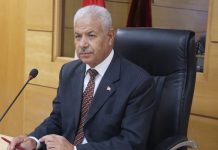
This requires remaining open to all forms of constructive cooperation, as emphasized by Fawzi Ghrab, Secretary General of the Ministry of Economy and Planning.
In an interview with TAP, Ghrab stated that the five-year development plan aims to boost economic growth, improve the performance of several strategic sectors, and focus on key issues such as education, health, training, and employment. Yet, the plan faces financial and climate-related challenges.
He highlighted that Tunisia is working on implementing projects that require its own resources, by strengthening the capabilities of the General Treasury so it can become a source of funding for public projects.
At the same time, the country maintains strong partnerships with numerous international financial partners, most of whom are willing to support Tunisia’s development efforts.
The crucial role of the private sector
Ghrab also emphasized the essential role of the private sector in driving Tunisia’s development process. Private investment, he noted, enables the creation of wealth and job opportunities. Still, Tunisia prefers a self-reliant approach over borrowing.
He pointed out that the main challenges for the 2026–2030 five-year development plan include relying on mechanisms to revive economic growth and revitalize key sectors such as phosphate, textiles, mechanical and electrical industries, tourism, and alternative tourism.
In response to a question about the importance of the circular economy and the energy transition, Ghrab stressed that Tunisia places great emphasis on digital and technological transitions.
The digital transition, he said, is a fundamental pillar of the upcoming plan, alongside efforts to introduce new tools to reduce the energy deficit and promote alternative energy sources.
Recognizing the impact of climate challenges, especially on water resources, whose scarcity has affected many sectors and citizens’ daily lives, Tunisia is working to establish policies that ensure water security and climate change adaptation.
In this context, he also noted that the Ministry of Economy is supporting the Council of Regions and Districts by providing training on territorial planning, raising key issues related to the sustainable use of water resources.