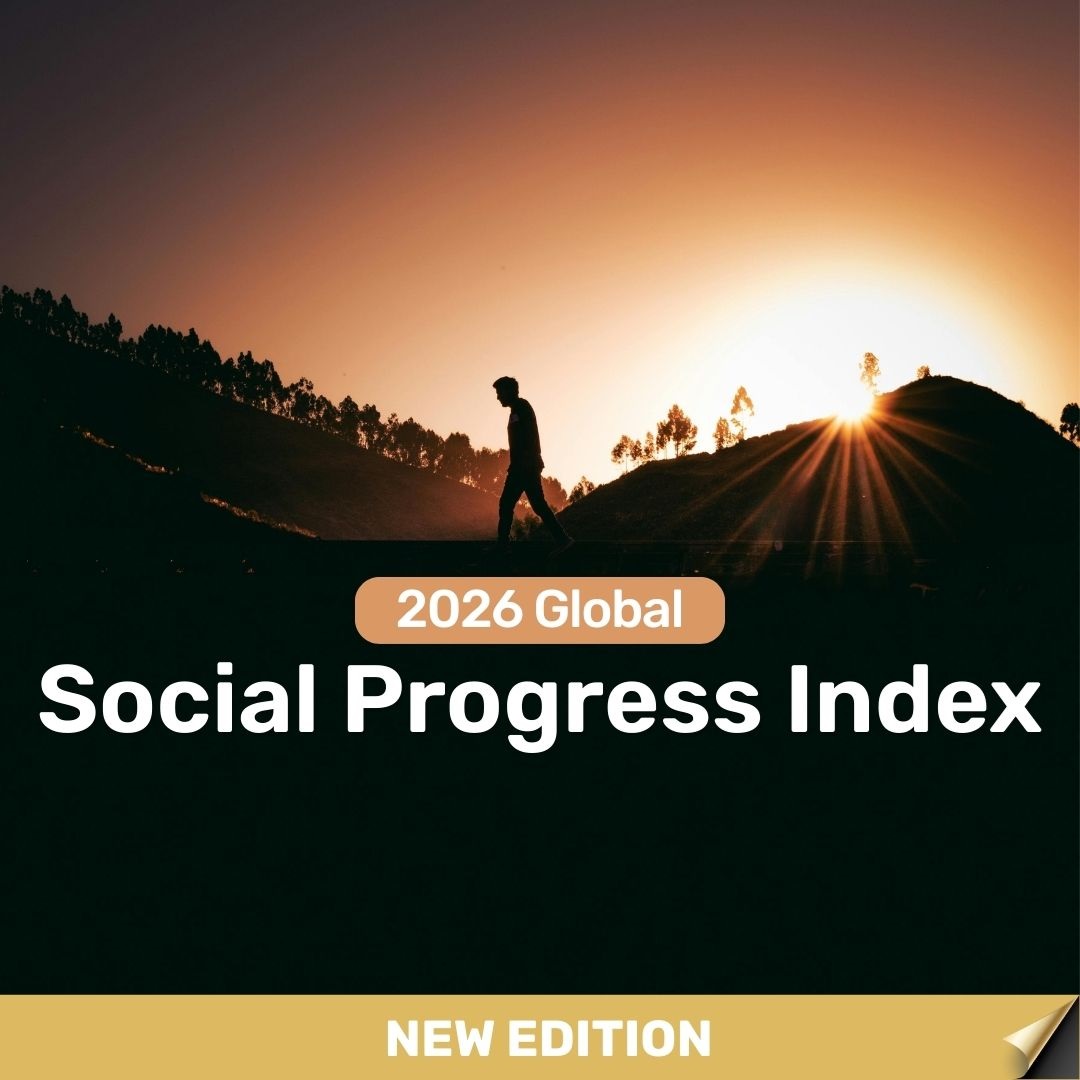
The US-based NGO The Social Progress Imperative has just published its Global Social Progress Index, an international ranking that evaluates countries not only on the basis of their economy, but above all on their ability to improve the quality of life and well-being of their populations.
Unlike purely economic indicators like GDP, this index focuses on concrete aspects of daily life and human development.
It is based on 57 social and environmental indicators grouped into three main dimensions: Basic Human Needs (access to food, health, housing, and security), Foundations of Well-being (education, access to information, and environmental quality), and Opportunity (personal rights, individual freedom, social inclusion, and access to higher education).
Tunisia: Intermediate social progress in 2026
For Tunisia, its social progress in 2026 ranks 89th globally out of 171 countries evaluated by the index. On the African continent, it holds the 3rd place, just behind Mauritius and Algeria. With an overall score of 66.53/100, Tunisia is in tier 3 of the global ranking.
The index classifies countries into six “tiers”, from the highest level (tier 1, countries with very high social progress) to the lowest level (tier 6, countries with major social difficulties).
Tier 3 corresponds to an intermediate level. Tunisia shows strong performance in certain aspects of well-being, while having significant room for improvement in other areas.
The report highlights several positive points for Tunisia: access to electricity and basic services is largely satisfactory, and basic human needs are generally well covered, with notable progress in primary health and housing.
However, opportunities remain limited, particularly in higher education, social inclusion, and individual freedoms. Citizen participation and civil rights still fall short of expectations. Tunisia also faces challenges in environmental quality and trust in institutions.
Mauritius, Still Africa’s top-ranked country
On the African scale, the island of Mauritius dominates the social progress ranking. According to the report, it ranks 56th globally with a score of 72.28/100 and is part of tier 2, which groups countries displaying high social progress, just below the global leaders (tier 1).
The country stands out in particular for its strong performance in health, education, and infrastructure, which contribute to an overall high level of well-being for its population.
It is followed by Algeria, ranked 79th with a score of 67.62, then by Tunisia. The African top 5 is completed by South Africa (66.25 – 91st globally) and Cape Verde (65.79 – 94th globally).
These four countries, except for Mauritius, are in tier 3, corresponding to an intermediate level of social progress, with strengths in certain aspects but gaps to fill in other areas.
Other African countries appear in the top 10, but with more modest scores and ranks: Morocco – 63.19 (99th globally, 6th in Africa, tier 4), Botswana – 62.96 (100th globally, tier 4), Libya – 60.43 (104th globally, tier 4), Namibia – 60.06 (tier 4), and Ghana – 59.35 (106th and 107th globally). As for Egypt, it is further down the ranking, at 119th place with a score of 56.49.
Nordic countries still at the top
On a global scale, the social progress ranking remains generally stable from one year to the next. Nordic countries regularly dominate the ranking, with Norway in the lead (score 91.73), followed by Denmark (91.16) and Finland (90.83).
The Top 5 is completed by Sweden (90.47) and Switzerland (90.41). These countries are distinguished by robust social systems, a high level of protection for individual rights, universal access to education and health, as well as strong inclusion of vulnerable populations.
At the other end, some major economic powers display much weaker scores in terms of social progress. The United States, despite its global economic weight, ranks only 32nd, far behind Nordic and European countries.
In the Arab world, the United Arab Emirates hold the first regional place, 44th globally with a score of 74.68, followed by Qatar (48th, 74.12) and Kuwait (49th, 74.06).
At the other end of the global ranking, the countries weakest in terms of social progress are mainly in Sub-Saharan Africa. South Sudan achieves an extremely low score of 27.71, followed by the Central African Republic (28.78), Chad (29.60), and Burundi (33.43).
These countries share common structural issues: prolonged conflicts, fragile institutions, extreme poverty, low access to health and education services, as well as insufficient infrastructure.