An exclusive, though not exhaustive, analysis of 2025 financial data (with some large groups still not fully visible) reveals record levels of dividend distribution among Tunisia’s leading banks.
While BIAT maintains its position as leader in total volume, it is a shareholder of Attijari Bank that captures the largest individual payout. The Tunisian state, via the BNA, remains a significant beneficiary. A breakdown of the financial flows driving the economy:
A strong season for banks
The annual general meeting season ends with a clear conclusion: Tunisia’s banking sector is in good shape and showing it to shareholders. According to compiled 2025 financial data, hundreds of millions of dinars were injected into the economy through dividends, reflecting the sector’s resilience and profitability despite a challenging macroeconomic environment.
Top three distributors
Unsurprisingly, BIAT ranks first in total dividends distributed, with a massive 244.8 million dinars, based on a dividend of 6.000 dinars per share.
Attijari Bank follows with 176.4 million dinars, with a dividend of 4.200 dinars per share.
Amen Bank takes third place, with an estimated 125.7 million dinars (based on a proposed 3.600 dinars per share), marking an increase of over 9% compared to the previous year.
Other banks, such as Banque de Tunisie (BT), BNA, UIB, and UBCI, also contributed, distributing between 26 million and 94.5 million dinars. The only exception was STB, which announced no dividend distribution for the year.
Concentration of dividends
A closer look at ownership structures reveals strong capital concentration in major private banks.
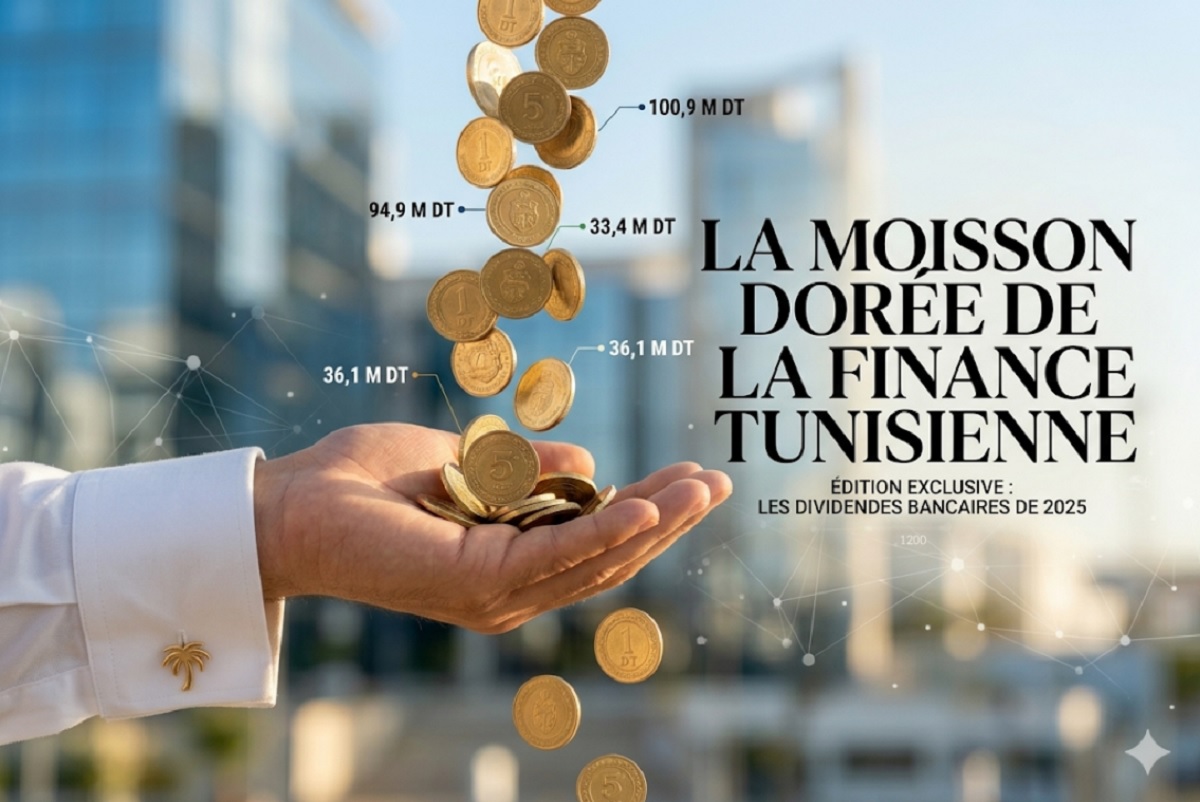
At Attijari Bank, Andalucarthage Holding captures the largest individual dividend payout, 100.9 million dinars, nearly 57% of total distributions.
At BIAT, the Mabrouk Group remains a dominant force, collecting nearly 95 million dinars (about 39% of the total). The top four shareholder groups alone account for around 72% of BIAT’s total dividends.
At Banque de Tunisie, the concentration is less pronounced, with Crédit Mutuel (35.33% stake) receiving around 33.4 million dinars.
The Tunisian state’s role
Despite private sector dominance, the Tunisian state remains a key shareholder, notably through BNA. Out of a total 70.4 million dinars distributed, the state received 24.8 million dinars in dividends in 2025.
The state is also a majority shareholder in STB (which paid no dividends) and BH Bank (yet to decide on distribution). These institutions play a major role in supporting the state budget, particularly through treasury instruments.
Minority shareholders matter
While large groups capture most dividends, minority shareholders (holding less than 5%) still receive substantial amounts.
At BNA, they collectively received 45.6 million dinars, while at BIAT they received over 69 million dinars. Overall, tens of millions of dinars flow directly into household savings and consumption through these investors.
Key issues and outlook
This massive dividend distribution sends a strong signal of confidence in the banking sector’s financial health. However, it raises questions about balancing shareholder returns with the need to strengthen capital buffers in an uncertain economic environment.
For now, both major investors and small shareholders are benefiting from this strong year, with dividends likely to be reinvested to support Tunisia’s economic recovery and job creation.
Foreign ownership and capital outflows
Analysis shows significant, sometimes majority, foreign ownership in several listed Tunisian banks:
UIB: 52.34% owned by Société Générale (France)
BT: Crédit Mutuel (France) holds 35.33%
UBCI: BNP Paribas retains 11.09%
Attijari Bank: controlled by Andalucarthage Holding (57%), linked to Morocco’s Attijariwafa Bank
Impact on foreign exchange reserves
When dividends are distributed, foreign shareholders must convert their share into foreign currency (euros, Moroccan dirhams, etc.) before repatriation.
This creates pressure on Tunisia’s foreign exchange reserves, as conversions occur on the interbank FX market. In a context of dinar pressure and current account deficits, these outflows are closely monitored by the Central Bank of Tunisia.
A delicate balance
The Central Bank must strike a balance between maintaining Tunisia’s attractiveness for foreign direct investment, requiring free profit repatriation and preserving external financial stability. While foreign investment brings capital and expertise, it also creates recurring foreign currency outflows through dividends.