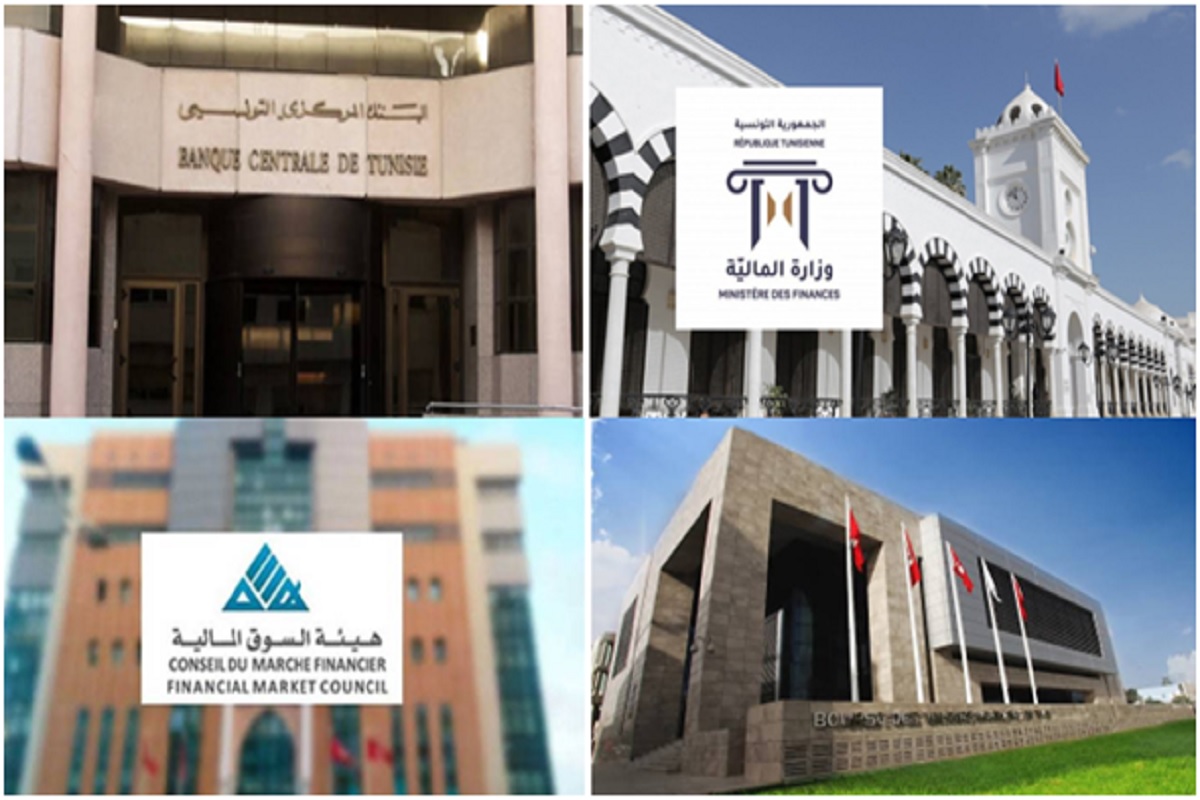
Financial transparency remains an uneven promise in Tunisia. From the Central Bank of Tunisia (BCT) to the Ministry of Finance and the Financial Market Council (CMF), publications intended to inform policymakers, investors and citizens are often delayed by years. An overview of an information gap that strikes at the heart of the country’s credibility.
At the Central Bank: key indicators in real time, the rest lagging behind
On the website of the Central Bank of Tunisia, three sections are regularly updated: the governor’s activities, board meeting statements and key indicators. Journalists have learned to monitor the latter closely, as they continuously reflect the state of the currency, reserves and credit activity.
The contrast becomes striking in the publications section. The annual report and the governor’s statement still date back to 2024. The same applies to reports on banking supervision and banking mediation.
The monthly economic bulletin, which is supposed to be issued every month, dates back to April 2026. Delays also affect the financial statistics bulletin, the external debt statistical report, Tunisia’s balance of payments and international investment position report, as well as the report of the Tunisian Financial Analysis Commission (CTAF). All of these documents date back to 2024.
The stakes are significant. These reports are the raw material of economic analysis. Without updated external debt figures or a recent balance of payments report, assessing sovereign risk is based on outdated data.
At the Ministry of Finance: the 2026 budget remains a blind spot
At the Ministry of Finance, budget execution raises an even sharper transparency issue. Provisional results for the execution of the 2026 budget are still unavailable, even in preliminary form, despite the fact that discussions have already shifted toward the 2027 budget. Yet these figures do exist on the desk of the current minister, as was the case with her predecessor.
This gap deprives observers of a key benchmark. How can one assess the trajectory of public finances, the rigidity of the wage bill or the burden of debt servicing when the current fiscal year remains a black box until accounts are formally closed? Tunisia is not a monarchy but a democracy, yet citizens still do not know what those appointed in their name are doing on behalf of the public.
The report on the situation of public enterprises illustrates another dimension of the problem. Published only once a year during the Finance Law process, it covers just 88 companies out of a total of 114. More strikingly, the figures included relate only to the 2020, 2021 and 2022 fiscal years.
The paradox is worth noting. If an institution as powerful as the Ministry of Finance struggles to obtain up-to-date data on the public sector, one can imagine the difficulty faced by researchers or independent journalists. At least, in this case, there is an authority asking for the information.
On the financial market: the CMF lagging behind by a full term
The same opacity affects the financial market. The latest report issued by the Financial Market Council dates back to 2023. It took the arrival of a new chairman for progress to be made regarding transparency among firms managing securities portfolios on behalf of third parties.
The issue also extends to listed companies. Few publicly traded companies regularly publish their financial statements and balance sheets. Some, such as BTL, appear to have stopped publishing information on the CMF website since 2021.
Others, including Tunisair, have not done so since 2023, seemingly without causing concern, least of all for the CMF itself, despite its role as market regulator.
Yet the regular publication of financial accounts is the foundation of trust in any financial market. Without it, investors operate blindly and price formation loses its compass.
An information gap undermining confidence
Taken together, these delays reveal a system in which public financial information arrives too late to support decision-making. The Central Bank continuously publishes its key indicators but allows major analytical publications to become outdated.
The Ministry of Finance communicates on future budgets without providing visibility on the current one. The CMF is making progress, but from a long way behind.
This imbalance is not insignificant. It fuels investor mistrust, complicates the work of analysts and weakens the official narrative about Tunisia’s attractiveness as an investment destination.
At a time when authorities are calling for a return of private investment, the first essential building block remains reliable, comprehensive and timely data.