The Tunisian commercial vehicle market is welcoming a new player.
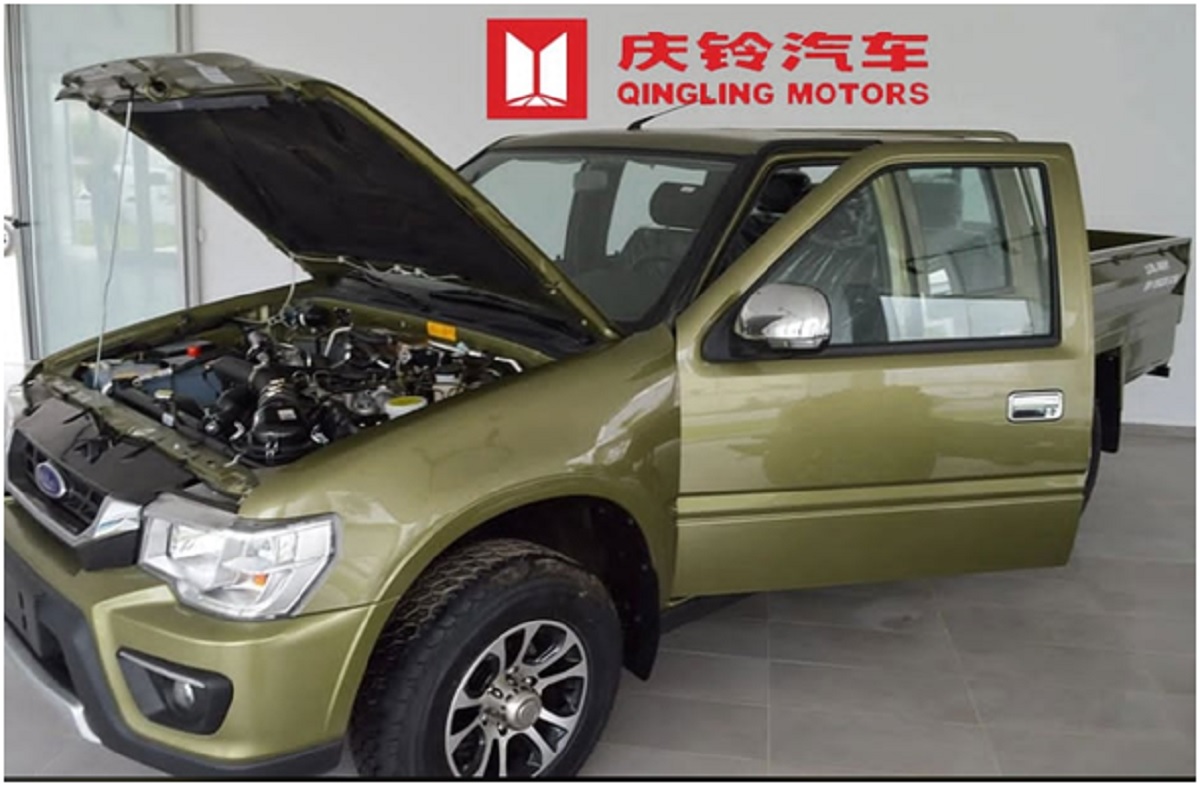
Qingling Motors, a Chinese manufacturer based in Chongqing specializing in trucks and commercial vehicles, has officially launched sales of its T17 pick-up in Tunisia through dealer “Tunisie Car,” a subsidiary of the Bayahi Group.
The group had previously held a stake in the BAIC (Beijing Automotive Industry Holding) dealership, which remains under the control of the Doghri Group through Transvet, a company specializing in the import and distribution of Chinese brands, notably ZX Auto and Kenbo.
What makes this market entry more than a simple import operation is that the T17 is assembled locally.
The company PROD CAR, originally based in the Amdoun industrial zone north of Béja (and linked through contact details to TPR, another Bayahi Group company), is reportedly responsible for assembling the vehicles from CKD kits (imported parts assembled locally).
The first shipment arrived in July 2025, and the first vehicle was expected to roll off the assembly line in August, although assembly operations have since reportedly moved to Mégrine.
PROD CAR, whose capital was increased to 3.88 million Tunisian dinars for the occasion, is thus reviving local vehicle assembly activity through this partnership.
The T17 is powered by a 3.0-liter Isuzu engine producing 128 horsepower. This is no coincidence: Qingling Motors was founded in 1985 as a Sino-Japanese joint venture between the Chongqing municipality and Isuzu Motors.
The Japanese automaker remains a key shareholder in the group, whose capital is mostly held by Chinese public funds. This connection with Isuzu underpins Qingling’s reputation in emerging markets for proven mechanics, controlled costs, and recognized reliability.
A loss-making Chinese group selling at a loss
Globally, and according to information gathered online, Qingling remains a modest player. Its 2025 revenue is estimated at around $642 million, with 33,226 vehicles sold, representing an average selling price of about $19,300 per unit, consistent with the light truck and pick-up segment. Exports remain limited, accounting for just 2.29% of revenue, or 6,412 vehicles, though this marks a 26% increase compared with 2024. Tunisia is part of the group’s international expansion efforts, alongside Singapore, where Qingling launched a right-hand-drive electric model.
Financially, Qingling’s situation requires nuance. The group posted a net loss of $2.8 million in 2025, half the loss recorded in 2024, reflecting genuine improvement, though profitability has not yet been achieved. Its net margin remains negative at -0.6%, meaning each vehicle sold is effectively produced at a loss.
To reverse the trend, management has set an ambitious target for 2026: reaching 60,000 annual sales, nearly doubling current volumes, by relying on economies of scale and the growth of its electric vehicle segment. In 2025, the group sold 10,001 electric vehicles, up 94%.
For the Tunisian market, Qingling’s arrival offers a double advantage. It broadens a commercial vehicle market still dominated by a few established players, while reviving local assembly capacity that needed fresh momentum.
The key question remains the long-term strength of the partnership, especially given that the Chinese manufacturer itself is still searching for financial balance.
Who are the Bayahis?
The Bayahi Group is a major Tunisian family-owned conglomerate active since the 1950s, with operations spanning industry, agriculture, and services. It is particularly known for its role in retail distribution (Magasin Général), food processing (SICAM) and insurance (Lloyd Assurance).
Founded after Tunisia’s independence by Youssef Bayahi through the takeover of SOTAL (Aluminium), the group later diversified under the leadership of the Bayahi family. It is active in industry, agribusiness, retail, and financial services, and now also in the automotive dealership sector, as many other Tunisian groups have done.
The Bayahi Group partners with international giants such as BA Glass through SOTUVER, while maintaining its status as a reference shareholder.
The Bayahis are also considered one of Tunisia’s largest private conglomerates, ranking among the country’s top 10 business groups, with overall revenues generally estimated at more than 1.5 billion Tunisian dinars.