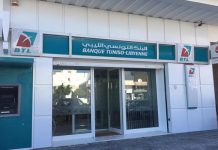
At its latest Executive Board meeting on February 11, 2026, the Central Bank of Tunisia (BCT) unsurprisingly decided to keep the key interest rate at 7%. A cautious decision, continuing the trend of previous months, presented as support for the ongoing disinflation process.
At first glance, the numbers seem to justify this strategy: inflation is slowing and price pressures appear to ease. But a closer look reveals a more nuanced reality. Behind the improvement in aggregate indicators, certain tensions persist, and several structural imbalances remain intact.
In other words, Tunisia’s disinflation is underway—but the question remains: is this a sustainable trend or just a statistical lull?
Silence at La Place de la Monnaie
For this article, the BCT was contacted starting Tuesday, March 10, 2026, to provide clarifications on these points. No response had been received at the time of publication. This relative opacity does not call into question the prudence of the monetary policy being pursued, but it complicates how markets and economic actors interpret the institution’s strategy, if indeed the BCT wishes them to.
In February 2026, the Central Bank of Tunisia once again held steady: no surprise, the key rate remains stuck at 7%. A predictable, almost monotonous decision, justified by the institution as an effort not to disrupt a still-precarious disinflation. But make no mistake: behind this calm exterior, the ship is rocking.
Attempts to get the BCT to speak in early March met only with silence. This refusal to communicate is not trivial; it is a message in itself. It leaves investors and households navigating blindly through an economic fog.
By law 35 of 2026, which establishes the BCT’s status, maintaining price stability is its cardinal mission. This should reduce economic uncertainty and reinforce transparency and communication, particularly regarding monetary policy. Yet, within the BCT, communication seems largely limited to press releases summarizing board meetings, a legal obligation, not a deliberate choice.
Prices: A statistical mirage?
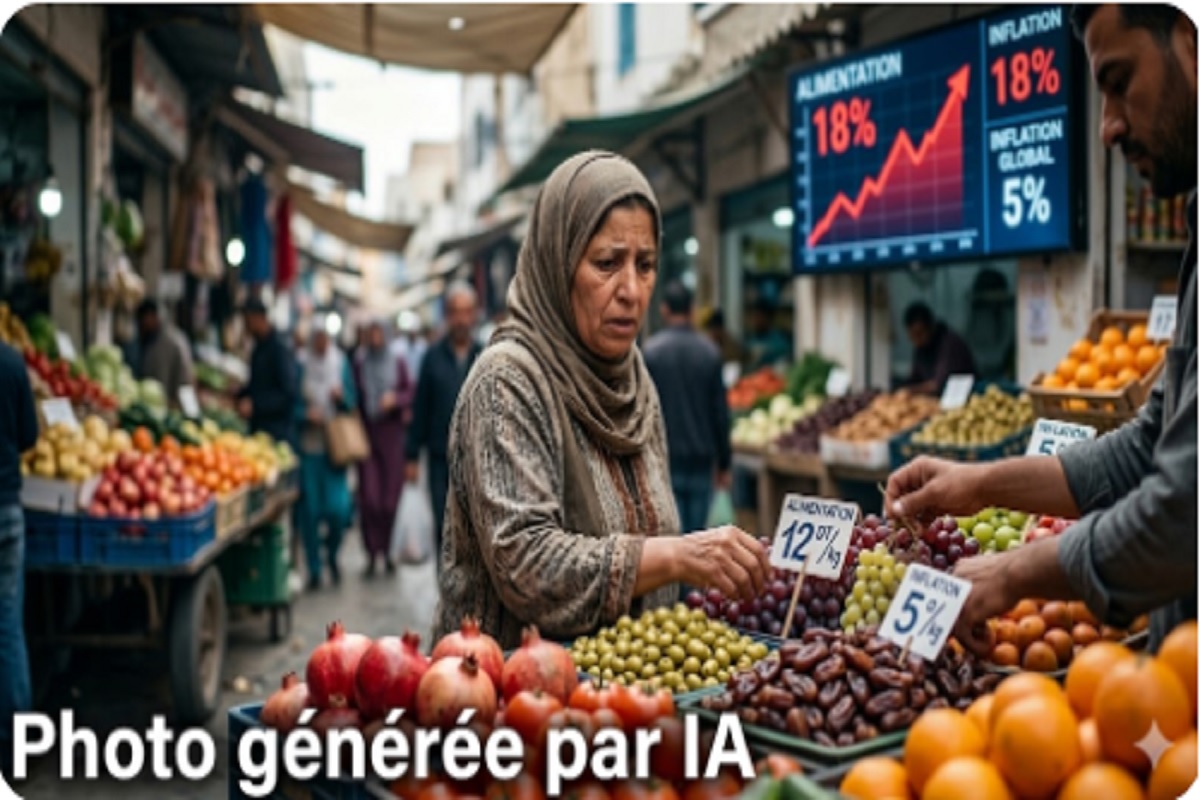
On paper, the numbers look promising: overall inflation fell to 4.8% in January. But February brought a sharp rebound to 5%. Why? Because the everyday basket for Tunisians sees no truce. Food prices are soaring again at 6.7%, meat, fish, fruit… this is no longer economics, it’s survival.
“Core” inflation seems calmer at 4.6%. That looks good. But when free-market prices jump (+6.1%) while administered prices barely move (+0.8%), the real problem becomes clear: the market, not the BCT’s press releases, is calling the shots.
Monetary policy: What exactly are we waiting for?
At 7%, the BCT is essentially playing for time. The MMR even fell slightly to 6.99%, a symbolic, almost negligible drop. But the real discomfort lies elsewhere. Where is the direction? No explicit inflation target has been announced. The institution is moving without a lighthouse, without a clear trajectory. In any serious country, the central bank signals its intentions; here, it’s a mystery.
The trade deficit: Energy devours us
Let’s look at the real monsters: the 2025 trade deficit reached nearly 22 billion dinars, a hemorrhage. Energy alone accounts for 11 billion dinars, while exports struggle to grow. The coverage ratio continues to decline.
The result? Tunisia depends entirely on the goodwill of its diaspora and tourists to fill foreign currency reserves. It’s a house of cards, ready to collapse with the slightest gust.
In Short
The BCT takes pride in its 110 days of reserves and its 7% rate. But it seems to forget that monetary stability is not an end in itself if investment is stagnant and confidence is shattered. Without transparency on its scenarios and a credible growth strategy, this status quo will come at a high cost. Credibility cannot be decreed by the key rate; it is proven through vision.