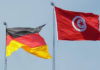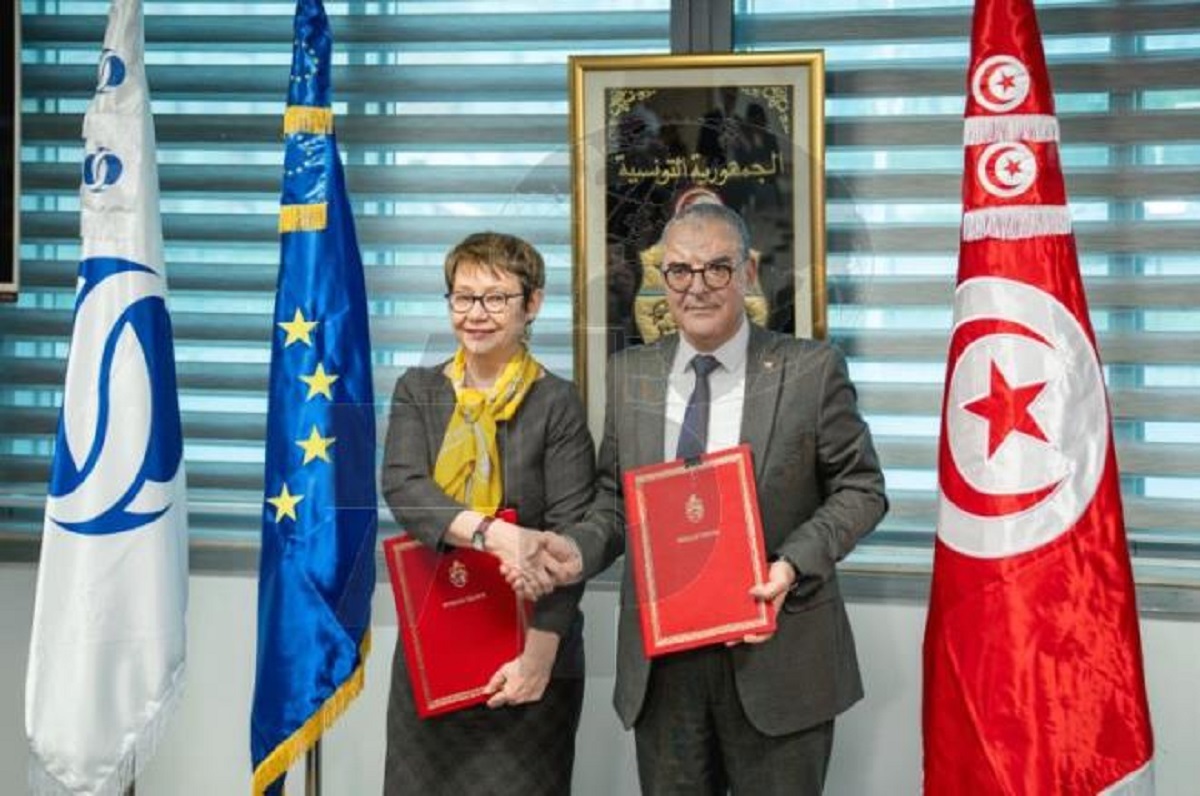
A financing and guarantee agreement worth €43 million (around TND 145 million) to fund the implementation of the second phase of the electricity interconnection project between Tunisia and Italy (ELMED 2) was signed on Thursday in Tunis between Tunisia and the European Bank for Reconstruction and Development (EBRD).
ELMED 2 aims to strengthen the electricity grid of the Tunisian Electricity and Gas Company (STEG) through the installation of overhead transmission lines, including incoming and outgoing lines in the governorate of Nabeul.
The project includes the installation of a 400-kilovolt (kV) overhead electricity transmission line of approximately 85 kilometers, linking Grombalia to Kondar and crossing four governorates: Nabeul, Ben Arous, Zaghouan and Sousse.
It also involves the installation of overhead incoming and outgoing lines between Ezzahra and Grombalia 1, connected to the 400/225 kV Grombalia 2 substation, with a total length of about 10 km, according to the project brief.
In addition, overhead incoming and outgoing lines will be installed between Seltene and Grombalia 1, also connected to the 400/225 kV Grombalia 2 substation, with a total length of around 10 km.
Historic opportunities for energy transition
Minister of Economy and Planning Samir Abdelhafidh said the loan will be repaid over 18 years, including a five-year grace period.
He noted that the signing comes at a particular time marked not only by major energy challenges, but above all by historic opportunities to accelerate the energy transition, strengthen security of supply and consolidate regional integration.
He stressed that the project, a key component of the ELMED ecosystem, is essential for its effective deployment.
ELMED 2 will help facilitate the large-scale integration of renewable energy, enhance the stability and reliability of the national electricity grid, and coherently complement the subsea interconnection program between Tunisia and Italy.
Beyond its technical dimension, ELMED 2 has major strategic importance, fully aligned with national priorities for energy transition, diversification of the electricity mix, and positioning Tunisia as a regional energy hub linking North Africa to the European electricity market, Abdelhafidh added.
The choice of the EBRD to finance this component once again reflects the convergence of visions and the mutual trust strengthened by more than a decade of cooperation, he said, concluding that the project’s success will serve as a reference for regional cooperation, sustainable development financing and transition.
For her part, Odile Renaud-Basso, President of the EBRD, welcomed the progress of Tunisia’s energy transition, noting that the financing marks an important step in strengthening the country’s energy infrastructure.
She described ELMED 2 as a catalytic decarbonization project that will reduce Tunisia’s dependence on imported gas and help achieve the national target of 35% renewable energy in the energy mix. She also said the project will promote inclusion through skills development for young people and greater access for women to energy-related professions and innovative projects.
EBRD: €3 billion invested so far
Renaud-Basso recalled that since the EBRD began operations in Tunisia, total investments have reached €3 billion, covering various sectors—particularly the private sector—with the aim of creating jobs.
She added that 2025 was a key year, with financing exceeding €400 million, notably targeting energy, phosphates, water, transport, as well as SMEs and private companies, mainly through banks.
“We have also launched a program to support young entrepreneurs with the backing of the European Union,” she said. For 2026, priorities will remain similar, with major investments planned in energy, water, public enterprise reform, SMEs and innovative companies.
STEG CEO Faysal Trifa said ELMED 2 will strengthen STEG’s transmission network through a 400 kV line linking Kondar and Grombalia (85 km) and around Grombalia (20 km). The project will enable the transfer of electricity produced mainly in the south to the north and major consumption centers, as well as the export of part of this green energy to Europe.
It should be noted that EBRD President Odile Renaud-Basso is currently on a visit to Tunisia (January 15–16, 2026). According to an EBRD statement, she is expected to meet senior Tunisian government officials, local and international partners, and public- and private-sector clients.
She is accompanied by Nodira Mansurova, EBRD Head of Operations in Tunisia, along with a high-level delegation from the Bank.
Since launching operations in Tunisia in 2012, the EBRD has invested over €3 billion in 89 projects across the country, 65% of them in the private sector.