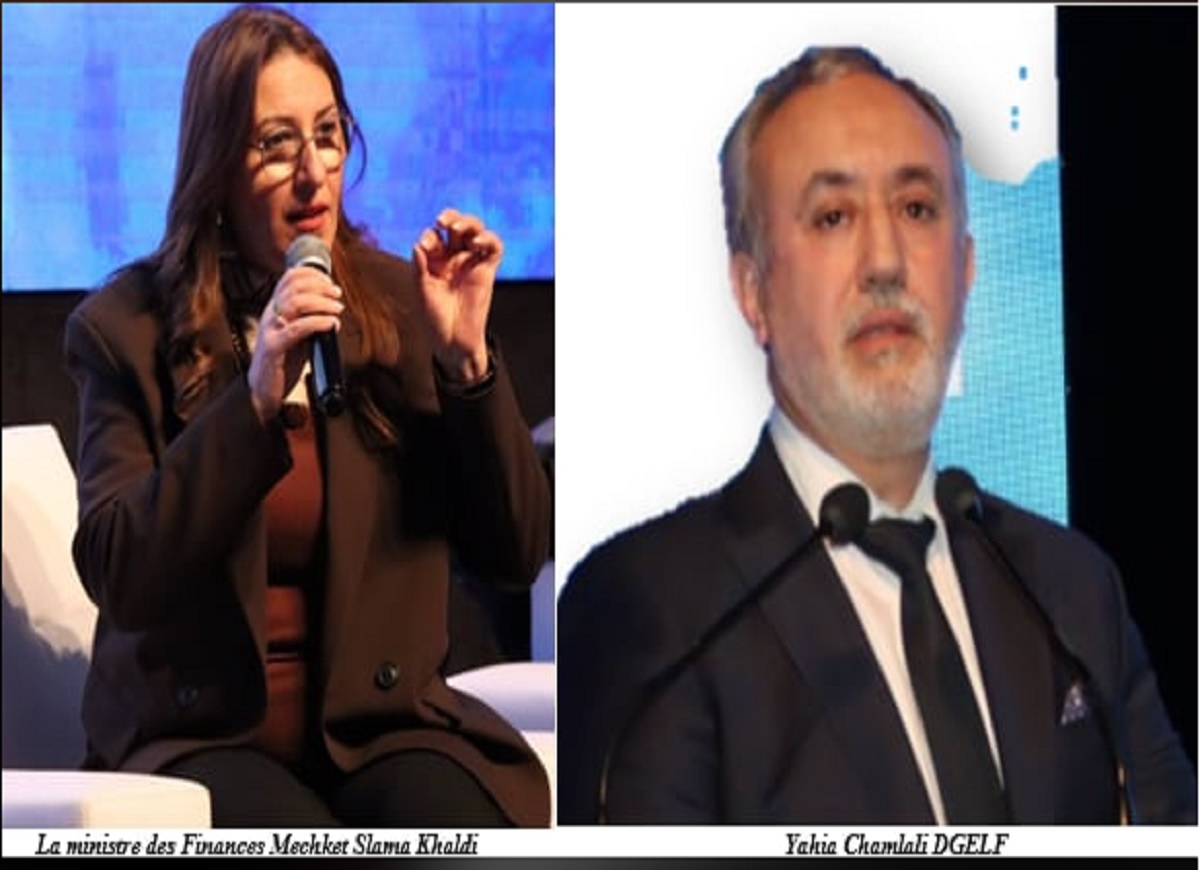
On January 14, the Ministry of Finance announced that “Article 53 of Law No. 17 of 2025, dated December 12, 2025, relating to the 2026 Finance Law, stipulates that all transactions must be electronically invoiced as of January 1, 2026.
In order to avoid possible difficulties in accessing electronic platforms, particularly for many small and medium-sized enterprises (SMEs) and other businesses, the Ministry will apply this article with flexibility so as to prevent any disruption or negative consequences for the economy as a whole.”
What the DGELF says about ‘flexibility’
Since the law is meant to be applied, especially as it clearly recalls the penalties for failure to comply with electronic invoicing (between 100 and 500 dinars for each paper invoice), the use of the term “flexibility,” which almost sounds like heresy coming from the mouth of a tax auditor, left more than one business leader perplexed.
The issue appears to have been quickly acknowledged by the Ministry of Finance, which should have anticipated this in the Finance Law.
It therefore became necessary to explain this new concept of “flexibility” that the Ministry is tasked with applying, a role taken up by the Directorate General of Tax Studies and Legislation (DGELF).
In a joint note dated January 23, 2026, signed by DGELF Director General Yahia Chamlali, it is stated that “as part of a phased approach, and in order to ensure flexibility in the application of the electronic invoicing law, service providers who have submitted an application for affiliation with the relevant structure (without explicitly naming it), and who have not completed all the procedures and conditions required to join the electronic invoicing network, will continue to issue paper invoices in accordance with the legislation in force (the old or the new one? Should this not have been specified?) …”
TTN concerned, but not only…
This extension includes non-commercial professionals who are required to issue fee notes for all services they provide. In fact, however, electronic invoicing is not new in Tunisia, as recalled in the DGELF note.
It dates back to Government Decree No. 1066 of August 15, 2016, which set out the conditions for issuing electronic invoices and entrusted their management primarily to the company Tunisie TradeNet (TTN).
At the time, however, this involved registering and archiving electronic invoices, not creating them. The electronic invoice is created through each company’s usual invoicing system.
If the company is affiliated with the TTN platform, TTN receives the invoice, applies the electronic stamp, the registration number, signs it electronically, and then returns it to the company.
On December 12, 2025, the 2026 Finance Law merely extended the scope of electronic invoicing to the services sector. Until then, Article 18 of the VAT Code only offered VAT-registered taxpayers the option of issuing electronic invoices.
This type of invoice was mandatory for all transactions with the State, local authorities and public enterprises, as well as for sales of medicines and fuels between professionals, with the exception of retail trade.
Strangely, the same decree (dating back to a time when digitization was not yet touted as a top priority) allowed the issuance of paper invoices for clients who were not technologically equipped for electronic invoicing, or in PDF format, or required that copies submitted to the Ministry of Finance or presented during transport inspections be in paper form.
Somewhere along the line, the digitization chain is broken. And like the cold chain when it is broken, the product is spoiled.
“When the service is free, you yourself are the product,” said Chawki Gaddes
Before closing this parenthesis on the “flexibility” to be applied under the electronic invoicing law, which has been in force since January 1, 2026, it seems important to return to another issue, apparently overlooked by the Tunisian Ministry of Finance and highlighted by entrepreneur Khaled Azaïez in a recent opinion piece published in our columns.
Handled via an electronic platform, electronic invoicing requires the input of data, certainly sensitive, and even more so, specific to the companies that join or use these platforms. Such data could affect a company’s present and future, its finances and its competitive capacity.
Once compiled into electronic data, this information could become a formidable commercial weapon in the hands of competitors.
For those who are not equipped, private operators, some in cooperation with foreign financial entities, are already communicating that they offer, in some cases free of charge for small invoicing volumes, invoicing solutions that directly generate electronic invoices.
Yet the invoice is a core element of all the information that makes up a company’s data. Data that requires confidentiality and history abounds with examples of data being sold or misused in ways that are not always above board.
The late Chawki Gaddes, former president of Tunisia’s National Authority for the Protection of Personal Data (INPDP) and former president of the Francophone Association of Personal Data Protection Authorities (AFAPDP), used to say that when the service is free, you yourself are the product.
Is it not time for the Ministry of Finance to once again adjust course and more clearly regulate the use of Tunisian companies’ data?