Tunisia’s Gross Domestic Product (GDP) reached 24,945 million dinars in volume in the first quarter of 2026, at constant 2015 prices. Year-on-year growth (Q1 2026 compared to Q1 2025) stood at +2.56%, driven by an absolute gain of 622 million dinars. However, the quarterly change (Q1 2026 compared to Q4 2025) shows a decline of -0.29%.
These two readings are not contradictory. They simply reflect two different time perspectives: an economy that is growing year on year, but which is experiencing a seasonal decline between the fourth quarter of 2025 and the first quarter of 2026.
Where does the +2.56% annual growth come from?
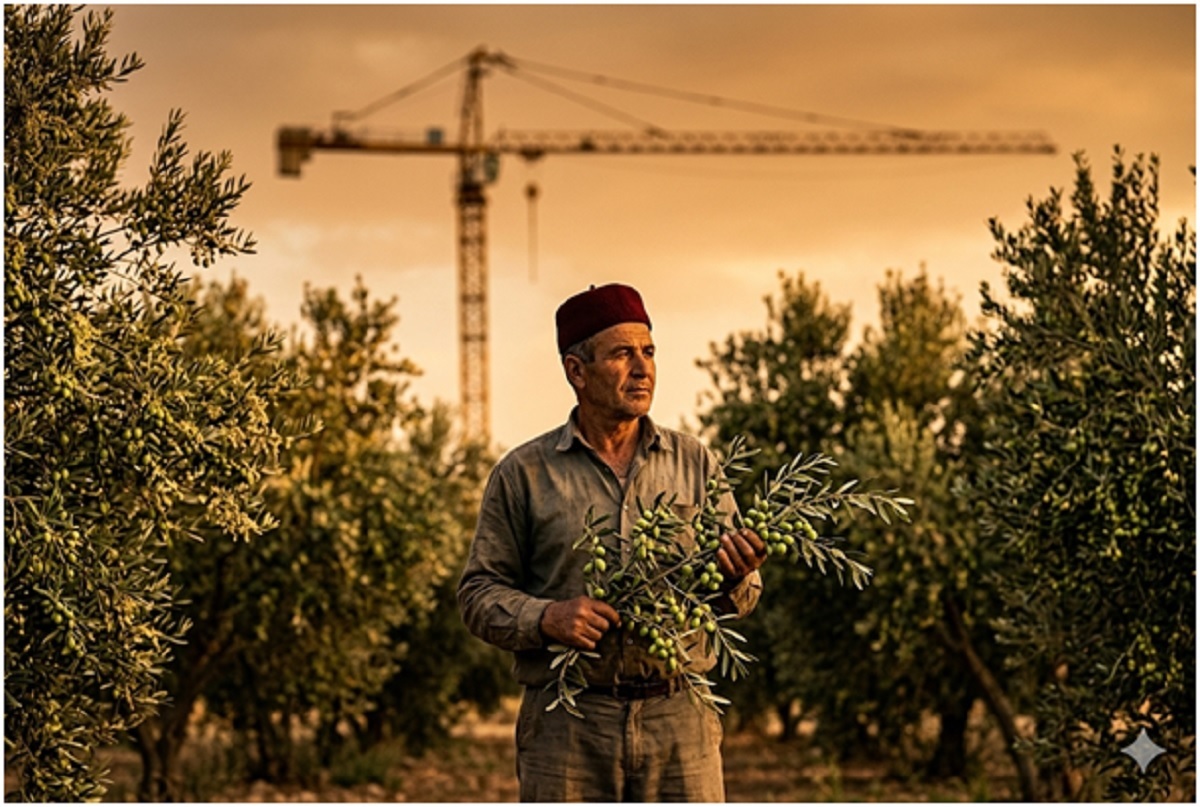
The growth is based on two main engines: the rebound in agriculture and agri-food on one hand and the momentum of domestic demand on the other.
Agriculture, forestry, and fishing increased by +6.81% year on year, contributing 148.8 million dinars in absolute terms to GDP. This is one of the largest sectoral contributions in value terms.
This performance reflects a rebound after previous climatic and water difficulties, particularly the -12.1% decline recorded in 2023.
Agri-food industries are the most spectacular positive surprise of the quarter, with a +15.08% year-on-year increase and an absolute contribution of 137.3 million dinars. It is the most dynamic manufacturing sector, marking a clear break from previous quarters. This increase is partly linked to good upstream agricultural results.
Market services provide a steady growth base. Trade and repair services grew by +2.43% (+69.1 million dinars), accommodation and food services by +4.02% (+32.4 million dinars), and information and communication technologies (ICT) by +4.15% (+36.8 million dinars). These three sectors reflect active domestic consumption and continued tourism recovery.
Public administration and defense contributed positively by 52 million dinars (+2.31%), as did education (+37.7 million dinars, +2.34%) and health (+28 million dinars, +2.58%). These non-market activities, by nature stable, provided a combined contribution of +98.6 million dinars to GDP, or 16% of total growth.
Mechanical and electrical industries recorded +4.30% annually (+41.8 million dinars), a positive signal for an export-oriented sector that is sensitive to European demand.
On the demand side, the breakdown of GDP is revealing. Domestic demand reached 27,926 million dinars in Q1 2026 compared to 26,555 million dinars in Q1 2025, an increase of +5.16%, which is the main driver of growth.
However, this internal momentum is offset by a deterioration in the trade balance. The external deficit increased from -2,232 million dinars in Q1 2025 to -2,981 million dinars in Q1 2026, a widening of -749 million dinars. Exports increased by +4.20% in volume, but imports surged by +9.29%, a rate 2.2 times higher. Strong domestic demand therefore pulls in more foreign goods, which limits the translation of demand growth into GDP growth.
Net taxes on products, a technical but revealing item, increased by +5.62% year on year. This is an indirect sign of real economic activity, since these indirect tax revenues are correlated with market transactions.
Why is the quarterly variation -0.3%?
The quarterly contraction of -0.29% is explained by the combination of three distinct factors: a seasonal downturn in industry, a deterioration of the trade balance and a concentration of shocks in specific capital-intensive sectors.
On the demand side, domestic demand actually increased by +137 million dinars between Q4 2025 and Q1 2026. It is external trade that caused the downturn. Exports fell from 11,472 million dinars to 11,103 million dinars, a drop of -369 million dinars (-3.22%) in a single quarter. Imports also declined by -160 million dinars, but much less strongly. Overall, the trade balance deteriorated by -209 million dinars, wiping out the gain in domestic demand and pushing GDP into negative territory for the quarter.
On the supply side, several industrial sectors recorded sharp quarterly contractions. Chemicals fell by -13.71% compared to Q4 2025, mining extraction by -13.59%, non-metallic mineral products by -12.76%, construction by -10.77%, and mechanical and electrical industries by -9.15%. These figures reflect a typical seasonal effect of Q1 for construction-related industries, which usually slow at the beginning of the year, but also a real cyclical decline in chemicals and mining.
The only major compensating sector was agri-food industries, which surged by +21.92% compared to Q4 2025, benefiting from seasonal agricultural processing campaigns at the start of the year. Without this offset, the quarterly decline would have been much deeper.
Strengths
Annual growth of +2.56% remains positive in a difficult macroeconomic environment marked by persistent global energy tensions and a slowdown in world trade. It is a sign of resilience.
The rebound in agriculture and agri-food is the main driver of growth this quarter. Tunisian agriculture is recovering after two years of water stress, pulling agro-food transformation with it in a virtuous value-chain movement. Together, these two sectors contributed 286 million dinars to GDP growth.
Services, especially tourism (accommodation and food services +4.02%), ICT (+4.15%), and trade (+2.43%), show a gradual diversification of the economic structure. These are labor-intensive activities that support employment.
Mechanical and electrical industries remain resilient with +4.30% annually, keeping Tunisia in its position as an industrial subcontractor for the European market, despite weaker demand in the eurozone.
Strong domestic demand, up +5.16% annually, reflects household confidence and consumption that is not collapsing, which is essential in a context of inflationary pressure and rising import prices.
Weaknesses
Construction declined by -7.12% annually (-72.5 million dinars), the largest negative contribution in value terms among all sectors. This is a worrying signal, as construction is a leading indicator of private and public investment. Its continued decline over several quarters suggests a freeze in major projects and weak fixed capital investment.
Chemicals collapsed by -11.52% annually and -13.71% quarterly. This sector is heavily affected by the decline in phosphate mining upstream and supply difficulties. Tunisia is gradually losing ground in its own chemical value chain, once a key export pillar.
Textiles and clothing continue their structural decline with -5.78% annually. This sector, once a major industrial employer, is failing to recover lost ground against Asian competition and energy costs.
Hydrocarbon extraction fell by -4.85% annually, confirming the long-term depletion of Tunisia’s oil and gas fields. This sector has lost more than 78% of its volume value since 2020. The absence of major discoveries makes this trajectory structurally negative.
The financial and insurance sector, at -1.20% annually, is contracting in real terms. For a developing economy, a shrinking financial sector means less financing for productive activity, which can slow future growth.
The widening trade deficit is the most systemic vulnerability. With imports growing 2.2 times faster than exports year on year, each point of domestic demand growth leads to greater leakage abroad. This dynamic is unsustainable in the medium term without either an export rebound or import substitution, or both.
Finally, the quarterly -0.3% variation, even if partly explained by seasonal effects, reflects a fragility in the growth model when facing external shocks. As soon as exports weaken over a quarter, growth turns negative despite strong domestic demand. This confirms that external competitiveness remains the weakest link in the Tunisian economy in 2026.