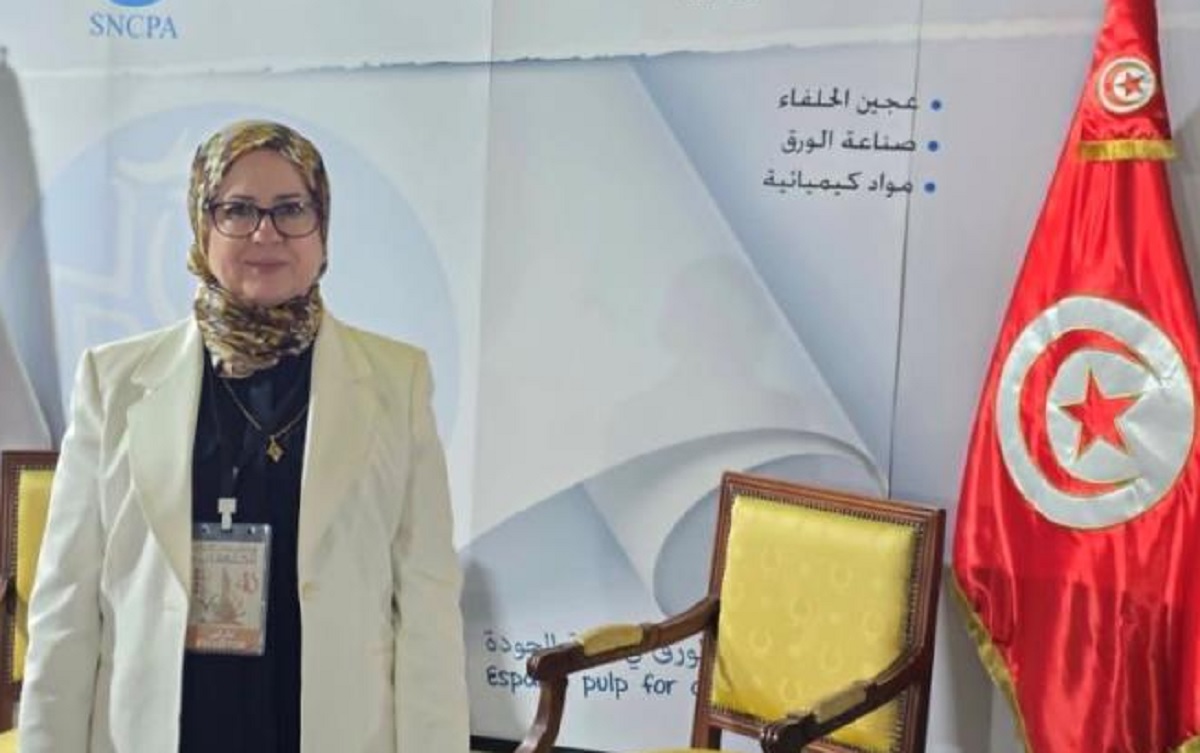
The National Cellulose and Alfa Paper Company (SNCPA), participating for the first time in the Tunis International Book Fair (FILT), is preparing a major restructuring program aimed at restoring its full production capacity and reducing Tunisia’s reliance on paper imports.
Taking part in the 40th edition of the fair with a stand bearing the slogan “By celebrating the book today, we celebrate the hands that contributed to its making,” the state-owned company based in Kasserine is showcasing samples of printing and writing paper, alfa pulp, and green chemical products.
Through this participation, SNCPA seeks to highlight its role in the book production chain, amid rising paper costs and supply difficulties in the publishing sector.
In an exclusive interview with TAP, SNCPA CEO Samia Briki said the company is currently operating at only 50% of the maximum capacity of its printing and publishing paper production unit, due to worn-out equipment.
Briki, who has headed SNCPA since 2024, explained that steps are underway to secure financing following the granting of a state guarantee after a ministerial council meeting dedicated to the company’s situation. SNCPA is described as the only company in the world producing alfa pulp for export.
The five-year restructuring program is expected to ultimately reduce paper imports and ease pressure on foreign currency reserves used to supply Tunisian printing houses.
Interview highlights
Asked whether this was the company’s first participation in the fair, Briki confirmed it was, noting that SNCPA was invited following its success in supplying paper for schoolbooks and notebooks over the past two academic years, despite limited investment and outdated equipment.
She said production was maintained under difficult conditions while awaiting financing, after a 2025 ministerial council approved the restructuring plan and state-backed funding.
Regarding next steps, Briki said the company is working with the Ministry of Economy and Planning to secure a financial partner. Planned investments will allow all production units to resume operations.
SNCPA operates three units: a paper production unit for printing and books, currently running at 50% capacity; an alfa pulp unit, currently inactive due to lack of funding; and a unit producing chemicals required for pulp manufacturing.
The company remains the only global producer of alfa pulp, which is fully exported due to its diverse applications and growing demand for natural materials. Alfa can also be used in textiles and even in banknote production.
The restructuring plan also aims to enhance the value of the alfa sector in the Kasserine region, where the plant is abundant.
SNCPA employs more than 700 staff, while several thousand indirect jobs depend on it, particularly alfa collectors supplying the factory.
The shutdown of the pulp unit has significantly affected employment and local economic activity, making its revival a key objective of the restructuring plan.
Addressing high paper costs for publishers, Briki said current production is entirely dedicated to meeting back-to-school needs, particularly subsidized notebooks and textbooks.
However, the company has additional capacity that could be directed toward supplying printing houses and non-subsidized notebooks, helping reduce imports and foreign currency spending.
She added that modernizing equipment under the restructuring program should improve competitiveness and lower production costs, making locally produced paper more competitive than imports.
As for the timeline, Briki said technical studies and specifications have been finalized, and the company is now seeking financing. Once a lender—whether Tunisian or foreign—is secured, the project can begin.
The program will span five years: three years to rehabilitate the paper production unit, one year to install the chemical unit, and a final phase to restart the alfa pulp unit. Timelines could be shortened if delays are avoided.