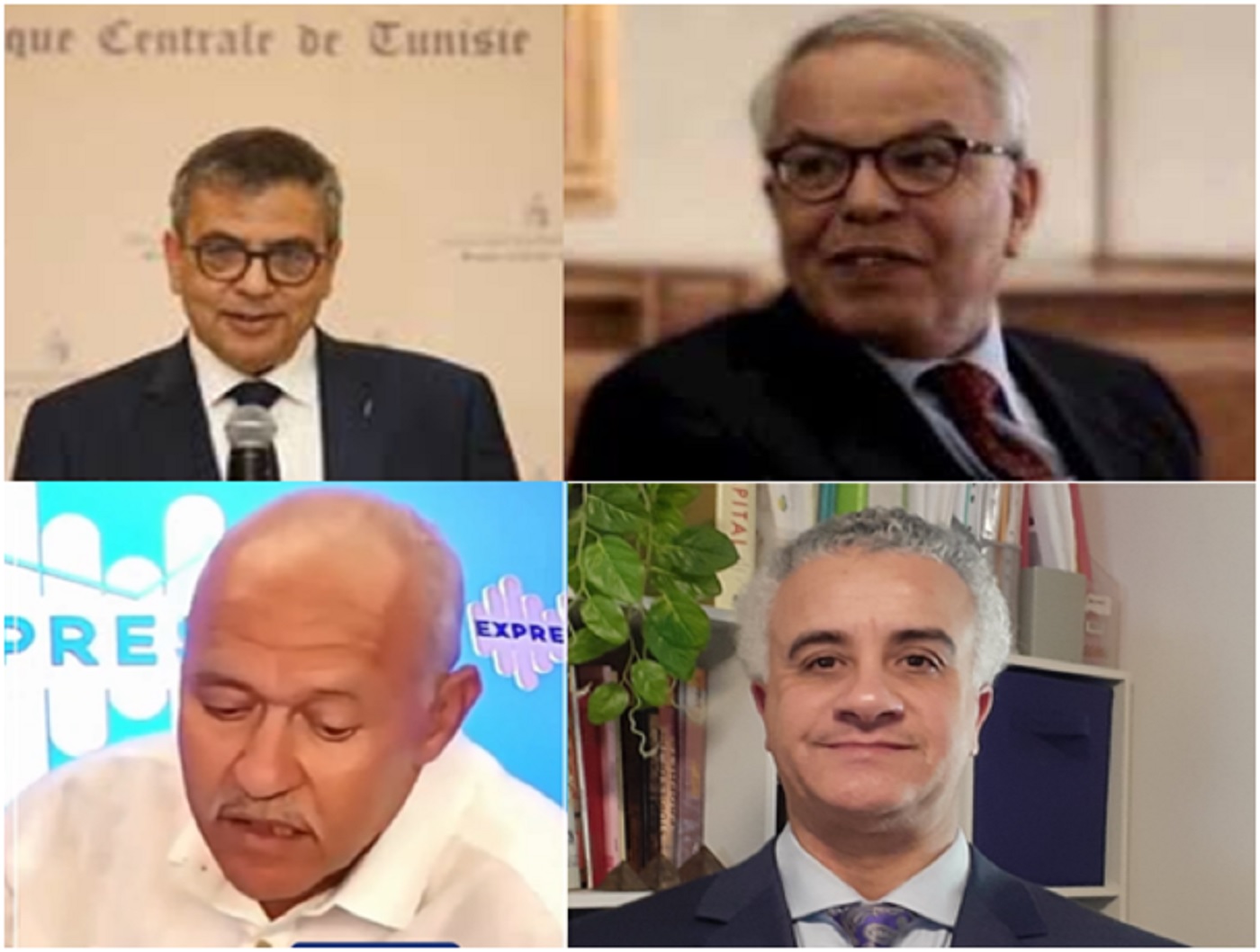
As part of his participation in the Annual Meetings of the World Bank Group and the International Monetary Fund, Fethi Zouhaier Nouri, Governor of the Central Bank of Tunisia (BCT), held a series of bilateral meetings on Thursday, October 16, 2025, with representatives of several international financial institutions.
He was representing a country led by a president who has almost severed all relations with the IMF and advocates for a self-reliant approach to financing the national economy via the BCT, even at the risk of straining the financial sector and foreign credit, and replacing the private sector with communitarian companies**, potentially privileging some over others.
During his meeting with Moody’s rating agency, an institution the head of the Tunisian state had previously disparagingly referred to as “Ommek Sannafa,” the Governor reviewed recent economic and financial developments in Tunisia since the agency’s last evaluation, highlighting positive results recorded by the national economy in 2025.
He emphasized that this improvement reflects sustained national efforts to place Tunisia on a path of sustainable economic growth to strengthen economic and financial stability.
He pointed out that these efforts had notably led to an improvement in Tunisia’s sovereign rating by Fitch, moving from CCC+ to B- with a stable outlook.
The Governor also discussed Tunisia’s preparation for its next Moody’s evaluation scheduled for Q1 2026.
Nouri versus Alaya: The official and the independent
Fethi Nouri also held a working session with representatives of several banks and international financial institutions, during which discussions focused on Tunisia’s economic and financial indicators over recent years.
On July 30, 2025, the BCT Board noted that:
“At the external sector level, the trade deficit (FOB-CAF) stood at 9,900 MD at the end of H1 2025, compared to 8,017 MD a year earlier, leading to a widening of the current account deficit, which reached 3,399 MD (1.9% of GDP) at the end of June 2025, compared to 1,964 MD (1.2% of GDP) a year earlier.
The widening of the current account deficit was partially offset by strong labor income flows and tourism revenues.”
Before the bankers, Nouri discussed Tunisia’s capacity to maintain sustainable growth. To a group of international investors in Tunisian bonds, he assured that Tunisia is undergoing a tangible economic recovery, reflected in the results achieved in 2025, particularly in budget execution, results that, according to the Governor, are largely unknown outside the Ministry of Finance.
Meanwhile, independent analyst Hachemi Alaya criticized in EcoWeek in September the “infantile superficiality prevailing in our country,” arguing that the Tunisian economy is far from the recovery already announced in 2022.
He cited a “surprising growth” in the Tunisian mining sector, which nevertheless suffers from “erratic production,” and highlighted wholesale inflation averaging 4.1% in H1 2025, not counting minimum wages rising faster than growth and labor productivity.
Alaya claimed that the Tunisian industry continues to decline, noting that since the beginning of the year, nearly 57 industrial companies with more than ten employees have disappeared, 45 of which were fully export-oriented.
Over the last five years, 698 industrial sites have vanished from Tunisia’s industrial landscape. He denounced an alarming investment deficit and artificial tourism statistics, concluding that the Tunisian economy is not in recovery.
He also highlighted Tunisia’s digital economy, under the heading “Facebook rather than Mobile Money”, noting that according to GSMA data, Tunisia ranks 5th in Africa, surpassed only by Libya in North Africa.
However, unlike elsewhere in Africa, where mobile infrastructure increasingly supports cashless payments and Mobile Money, in Tunisia it is primarily used for social media, particularly Facebook.
According to an INT survey on internet usage in Tunisia, social networks rank first among 18 internet uses (93.2%), while online banking is the least frequent use (15.3%).
Pessimistic Outlook for 2026: Chkoundali, Benbouhali, and Sghiri
Regarding the 2025 finance law and budget, economist Ridha Chkoundali recently told Express FM that it reflects “ a wide gap between objectives and policies,” comparing it to someone aiming to reach the moon using a cart.
Larbi Benbouhali, a Tunisian economist living in Australia, argued that the 2026 budget fails to allocate funds to invest in the real industrial production capacity of the economy, create new wealth, or reduce the high unemployment rate of 17%.
According to him, the 2026 budget will negatively impact the economy on two fronts: the BCT must maintain the interest rate at 7.5% to fight inflation, affecting household consumption and spending and the government will be forced to increase taxes to fund salary increases and higher production costs due to inflation, which will affect investment, ultimately resulting in low GDP, low investment, and high unemployment.
Dhafer Sghiri, a member of the Finance Committee at the Tunisian Assembly of People’s Representatives (ARP), offered a similarly critical view of the 2026 economic budget.
On Express FM, he called it a “bland, colorless, visionless project”, arguing that it lacks structural reforms or real incentive measures to support struggling businesses or citizens affected by the crisis.