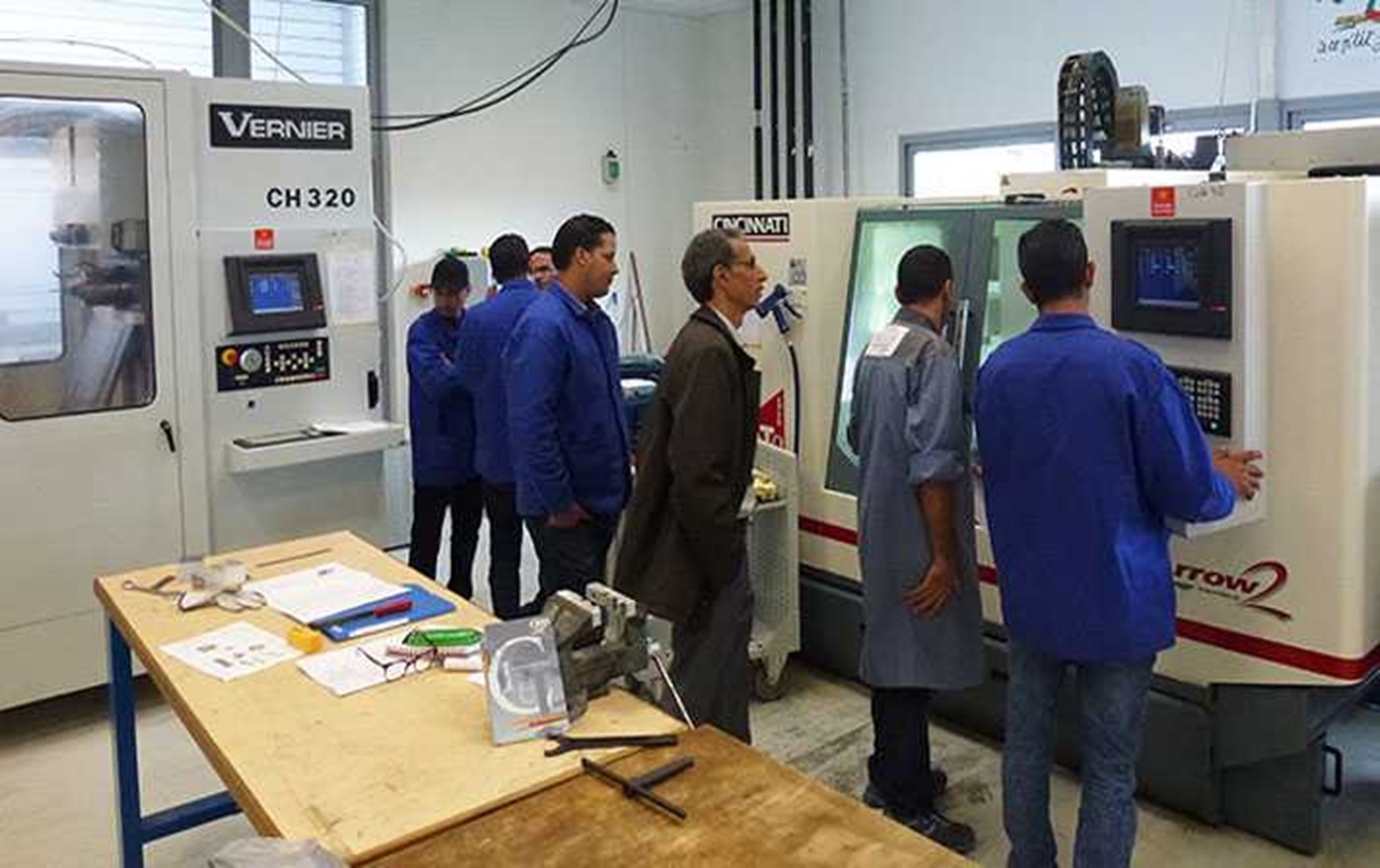
Tunisia has consistently prioritized the vocational training sector, which has seen significant growth over the years.
As such, a deep reform of the vocational training system remains a key factor in facilitating the integration of young Tunisians into the job market and creating more employment opportunities for unemployed youth.
According to recent figures from the Ministry of Vocational Training and Employment, Tunisia has 136 public vocational training centers with a capacity of 90,000 trainees, offering 270 specialties. The private sector operates 3,000 centers hosting 40,000 trainees.
In this context, the board of directors of the Tunisian Vocational Training Agency (ATFP) has just adopted a series of measures to improve the monitoring of training programs and strengthen coordination between different administrations.
These decisions were made during a meeting chaired by the Minister of Employment and Vocational Training, Riadh Chaoued, in the presence of ATFP officials.
The minister stressed the importance of rigorous preparation for the 2025-2026 training year, calling for the mobilization of all resources to achieve the sector’s strategic objectives.
He announced that this year would see quantitative and qualitative advances, while addressing challenges related to modernizing work methods.
Emphasizing the need for innovation, Chaoued urged an end to lax practices and the establishment of a culture of continuous evaluation.
For his part, Elyes Cherif, acting head of the agency, highlighted the importance of reliable information dissemination and greater involvement of executives in departmental activities.
Discussions also focused on ensuring accessible training conditions for all trainees, aligned with the needs of the national economy.
The Italian Touch!
The vocational training system represents a new opportunity for integration into both the national and international job markets.
Recently, the agency signed several agreements and partnerships, including one with Italy, aimed at integrating graduates of the national vocational training system into high-demand specialties in the Italian labor market, particularly welding and metal construction.
This five-year agreement with Italy is part of strengthening cooperation between Tunisia and Italy in the fields of employment, vocational training, and organized migration.
It will also help attract graduates from vocational training centers in other specialties, depending on the needs of Italian businesses.
It is worth recalling that the Tunisian government had announced a series of measures, including the introduction of new vocational training tracks in the university orientation guide to attract new high school graduates toward job-market-relevant specialties.
The goal of this measure is to reduce unemployment, enhance skills, and create new specialties that meet the needs of the private sector.