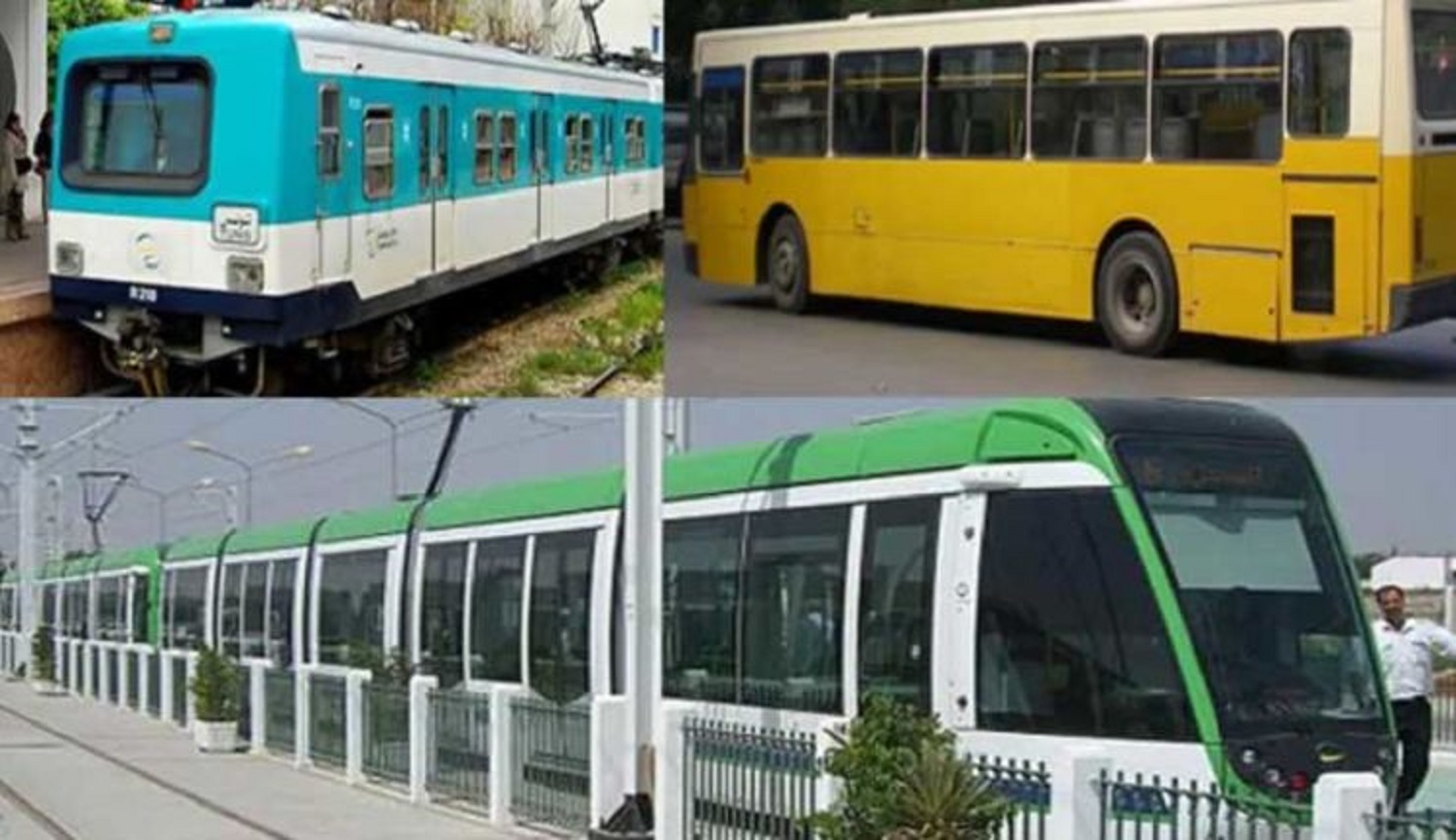
For years, Tunisia had been spared from social protests such as the general strike observed on Wednesday, July 30, leading to an almost total paralysis of light metro and bus traffic in Greater Tunis and the regions.
The work stoppage in the land passenger transport sector was launched by the General Transport Federation under the Tunisian General Labor Union (UGTT).
Scheduled for three days (July 30 and 31, and August 1, 2025), the strike concerns the Tunis Transport Company (TRANSTU), the National Interurban Transport Company, as well as regional road transport companies.
Except for a few uninformed passengers, transport stations were almost deserted.
At the light metro station of El Khadra district in Tunis, circulation came to a complete halt.
“No metro has passed since dawn. Many people didn’t know about it; some are forced to walk or look for a taxi,” a passenger told TAP news agency.
The same observation was made at the El Manar 2 bus stop, where another user lamented: “All lines are suspended. It’s a lack of respect for citizens, especially those who work far away and don’t own a personal vehicle.”
With the exception of individual taxis and shared transport vehicles, the entire land transport network has come to a halt, deepening the paralysis of both urban and interurban movement.
Photos published by the Federation show buses parked idly in depots, while several staff members participate in protest sit-ins inside company buildings.
Use of requisition!
The strike comes after the failure of several negotiation sessions between the Federation, the Ministry of Social Affairs, government representatives, and the relevant administration, with no compromise reached.
In a statement, the General Transport Federation accused the government of shirking its responsibilities, claiming that the strike achieved a 100% success rate from the early hours, despite requisition attempts by the Ministry of Transport.
In response, the ministry reiterated in a statement that the citizen’s interest remains its priority, highlighting state efforts to strengthen the transport fleet, improve infrastructure, and enhance staff working conditions in order to raise service quality.
However, the line ministry deemed the social demands, described as material and excessive, to be contingent on improving the revenues of public transport companies and restoring their financial balance.
The ministry announced that it had taken a set of preventive measures, including requisitioning, to ensure a minimum level of transport service during the three days of disruptions.
The SNCFT joins the fray
The union of the National Tunisian Railway Company (SNCFT) issued on Wednesday a three-day strike notice, from Tuesday, September 30 to Thursday, October 2, 2025.
The employees’ demands include revising the status framework, regularizing the situation of graduates and employees holding positions above their rank, and granting automatic promotions to those who have spent 25 years or more in the same category.
They also demand the reinstatement of dismissed workers, provision of work uniforms, an end to legal proceedings against employees who took part in sectoral protests, and the opening of recruitment due to staff shortages.