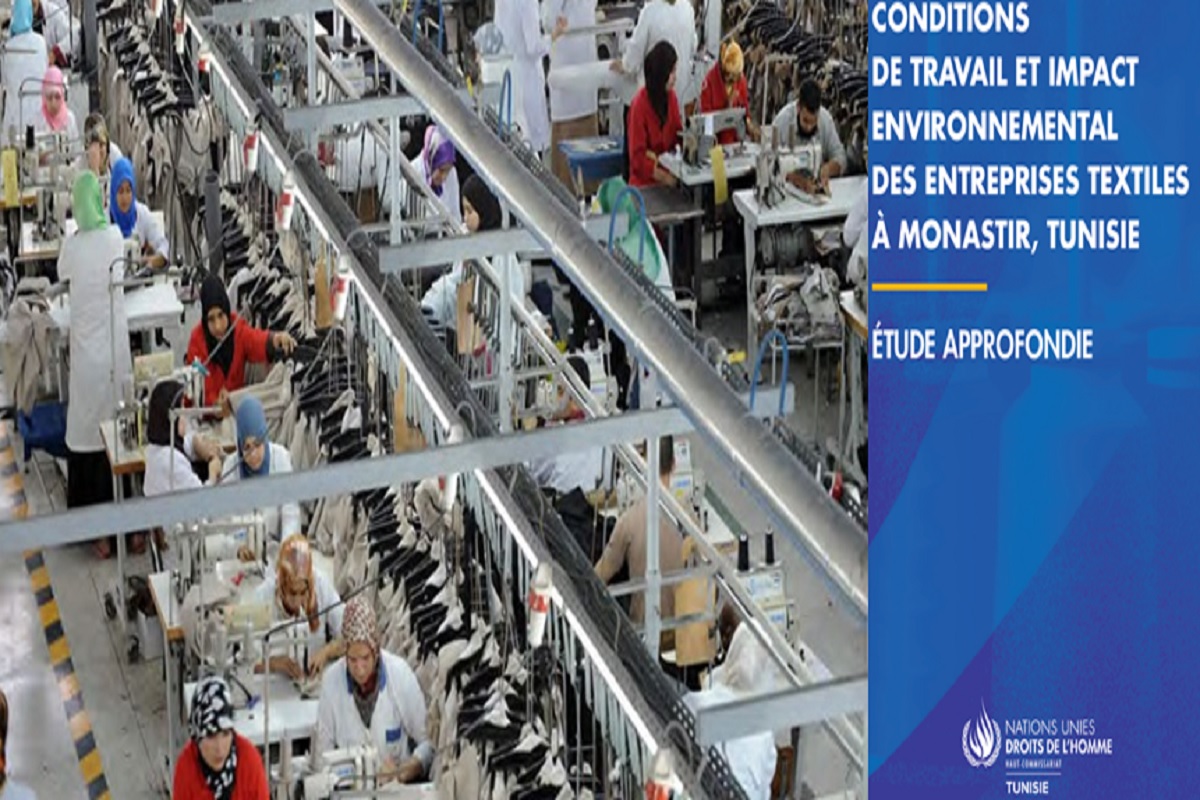
We are not proponents of conspiracy theories. But when reading this UN report, an indictment of a vital sector such as Tunisia’s textile industry, which provides between 50,000 and 160,000 jobs (30% of industrial employment), includes more than 1,400 companies (many of them foreign direct investments) and accounts for 16% of industrial exports, or between 9 and 10 billion dinars a year, one could almost believe it.
Indeed, under the guise of defending human rights and protecting the environment, the recent UN report on the textile sector in Monastir paints a catastrophic picture of one of the pillars of the Tunisian economy.
An accumulation of grievances, sweeping generalizations, and a lack of context: more than a study, the document reads like a bill of indictment. And its effects could be devastating for employment, investment, and the country’s international image.
A strategic sector treated as the ideal culprit
Tens of thousands of jobs, an entire region structured around the textile industry, billions of dinars in exports every year. This economic reality is relegated to the background by the report.
Instead, the UN opts for a single narrative: that of a sector portrayed almost exclusively as a space of exploitation and pollution. No prioritization. No recognition of modernization efforts. No distinction between responsible companies and abusive ones. Everything is lumped together.
A piling up of criticism that borders on caricature
Precariousness, low wages, occupational diseases, polluted seas, a failing state: the report overflows with accusations, like a one-sided prosecution file.
By relentlessly darkening the picture, it becomes suspiciously unbalanced.
The textile sector is described not as improvable, but as fundamentally toxic. Not as an economic engine to be reformed, but as a problem to be corrected, or even discouraged.
A methodology that deliberately ignores progress
Where in this report are the environmentally certified companies, investments in wastewater treatment, safety improvements in many units, or the social integration efforts benefiting thousands of female workers? Total silence.
By choosing to ignore any positive developments, the study constructs a frozen image worthy of the 1990s, even though the sector, like all industrial sectors, is in transition.
A dangerous message sent to international markets
In a world where brands flee at the slightest suspicion of social or environmental misconduct, this report acts like a red flag.
It implicitly tells buyers: Tunisian textiles are a high-risk sector.
And the outcome sought by some critics is almost predictable: disengagements, relocations, loss of contracts, factory closures. And it will not be company executives who pay the price. It will be the female workers.
Defending human rights, yes. But what about the right to work?
The irony is brutal. A report intended to protect workers may, in reality, weaken thousands of jobs, reduce investment and exacerbate regional unemployment.
Because without industrial activity, there are no wages, no social protection, and no possible progress. Precariousness does not disappear when factories close, it explodes.
An external perspective disconnected from economic realities
The document adopts a technocratic, normative, sometimes moralizing approach, with little real understanding of constraints such as fierce Asian competition, razor-thin margins imposed by major brands, constant pressure on production costs, and the fragility of local economies.
Condemning without proposing a realistic path for industrial transformation is playing with the future of thousands of families.
Vigilance, yes. Demonization, no
Yes, abuses exist. Yes, the environment must be better protected. Yes, oversight must be strengthened. But turning an entire sector into an international scapegoat is irresponsible. Sustainable development is built with industry, not against it.
In reality, political questions arise
Does this report aim to gradually improve Tunisia’s textile industry?
Or to impose unrealistic standards that will push buyers to go elsewhere?
Because history is well known: when a country becomes “too problematic,” brands do not reform, they relocate.
In conclusion, reading this UN pamphlet makes it clear that, while claiming to defend human rights, the report risks producing the opposite effect: fewer jobs, more poverty and a weakened national industry.
Tunisia needs reforms, not international pillorying. Social justice cannot be built on the ruins of a strategic economic sector.