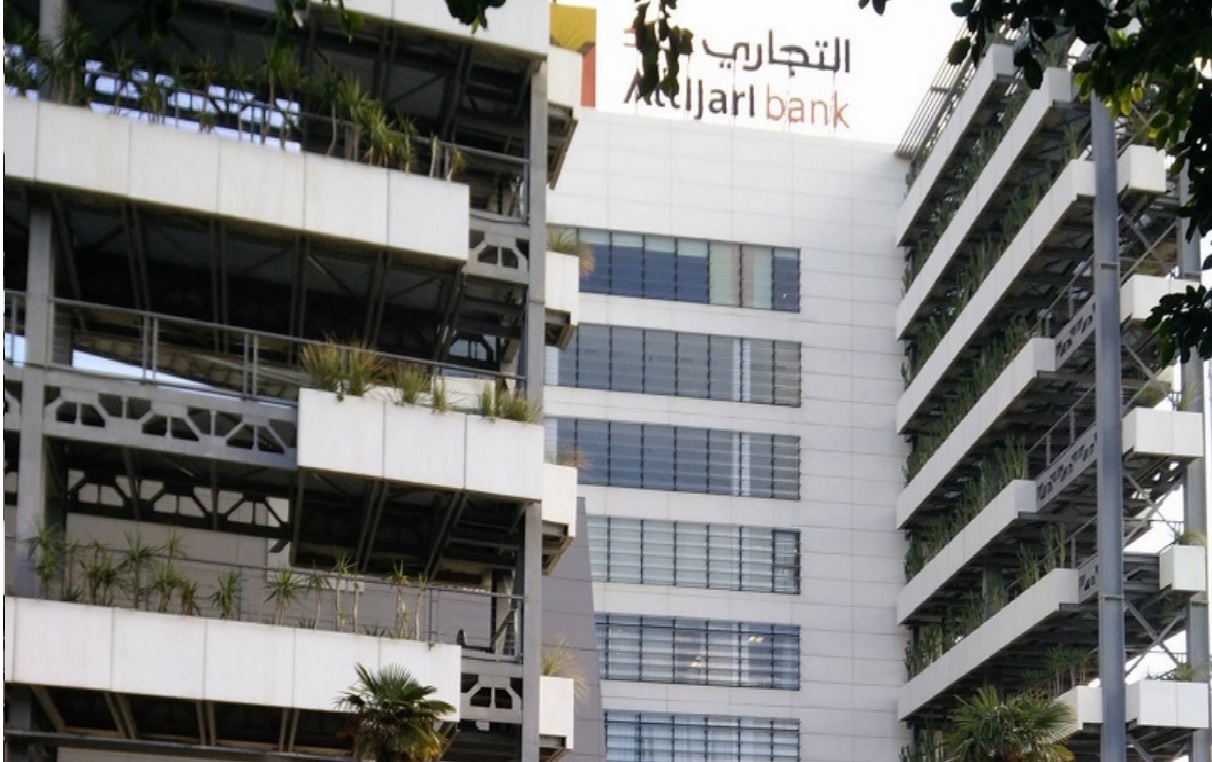
The interim financial statements of Attijari Bank Tunisia, a Moroccan-owned bank operating under Tunisian law, formerly “Banque du Sud”, as of June 30, 2025, are revealing and may carry a message for its Moroccan leadership.
They show a bank strengthening its balance sheet while operating in an environment of rising costs and tighter regulations. But they also point to a bank that favors government securities (Treasury bills, BTA) over lending, adopting a more defensive stance. In our view as economic press, this is a perception the bank would likely contest: it earns strong profits but distributes less. Here’s a breakdown:
A loan-to-deposit ratio that says a lot
Balance sheet analysis shows total assets at TND 12.97 billion (+6.2% vs end-2024). Customer deposits exceeded TND 11 billion, reaching TND 11.18 billion (+5.1%), confirming strong deposit-gathering capacity.
On the other hand, customer loans stagnated at TND 7.31 billion (-0.2%), reflecting a cautious approach to new lending. Meanwhile, the investment portfolio surged by +24.5% to TND 2.4 billion, likely indicating a shift toward public securities (BTA) amid weak credit demand.
The relationship between deposits and loans reveals a very low loan-to-deposit ratio. Deposits continue to grow, showing sustained depositor confidence, but lending has slightly declined. Normally, rising deposits should fuel credit growth, here, that link appears broken. The bank collects funds but does not significantly reinject them into the productive economy.
Instead, excess liquidity is largely redirected toward government securities (BTA/BTCT), considered risk-free. Outstanding holdings rose sharply (+24.5%) to TND 2.4 billion. Loans stagnate while deposits, bearing interest costs, grow, putting pressure on traditional intermediation margins. The bank compensates through investment income, shifting from financing private projects to financing the state using customer savings.
Operating costs weigh on profits
Net Banking Income (NBI) rose modestly by +2.0% to TND 356.5 million in H1 2025, driven mainly by investment portfolio income (+32.6%). Net profit reached TND 116.2 million, down -3.5% year-on-year.
This decline is largely due to a sharp increase in operating expenses (+25.4%) and staff costs (+8.8%), possibly linked to recent labor law changes.
Overall, the bank’s business model appears to be shifting: stability is prioritized over agility. While headline figures seem reassuring, deeper analysis reveals structural vulnerabilities.
Growth is no longer driven by core lending activity but by investment income. Without returns from government securities, organic growth would be nearly flat—indicating a “passive” performance tied more to state borrowing than private sector dynamism.
The “scissors effect”
When revenues grow by 2% but costs rise by 25%, operational efficiency deteriorates sharply. The cost-to-income ratio worsens, meaning profits are generated at an increasingly high cost.
This could signal either poor cost control or an overly heavy structure in a low-growth environment. The bank risks becoming a “heavy machine” with profitability eroded from within.
Another issue is provisioning: the bank made a significant effort (TND 93.4 million in collective provisions). Positively, this strengthens the balance sheet and resilience. However, it also weighs on net profit (-3.5%) and may reflect underlying concerns about asset quality. The stagnation in lending raises a question: is the bank losing confidence in the private sector’s repayment capacity?
Stable profits, lower dividends
Return on equity (ROE) faces potential pressure. Despite capital increasing to TND 250 million, declining net income implies lower returns for shareholders.
The board reported net profit of around USD 75 million for full-year 2025 (vs USD 75.1 million a year earlier). It proposed a dividend of TND 4.200 per share (≈ USD 1.36), down from TND 5 (≈ USD 1.62) previously.
For investors, Attijari Bank now offers strong safety (solvency, liquidity) but at the cost of stagnant value creation. The bank appears to be “bunkering”—sacrificing growth and its role as an economic engine to protect its balance sheet.
Counterpoint: prudence dictated by the market?
Management could argue for a more nuanced view. While exposure to Treasury bills has increased, it remains structurally lower than that of public banks. This is not complacency, but prudent liquidity management in a system where the state dominates borrowing.
As for weak lending (-0.2%), the issue may lie with demand, not supply. In a sluggish economy, viable investment projects are scarce. Lending indiscriminately would risk deteriorating asset quality.
Still, if the bank is navigating a weak market crowded by sovereign debt, the real challenge for a private bank is to think beyond this dynamic and find new growth drivers. The key question is no longer its solidity, widely acknowledged, but its ability to reinvent risk appetite in an economy that sorely lacks it.