The World Bank has just unveiled the fourth edition of its Container Port Performance Index (CPPI) for 2024, released in partnership with S&P Global Market Intelligence.
The index evaluates 405 container ports worldwide based on a central criterion: vessel turnaround time.
In other words, it measures the duration between a container ship’s arrival at the anchorage and its departure from the berth, a key indicator of a port infrastructure’s operational performance.
The CPPI methodology relies on a massive dataset with 182,000 vessel calls recorded in 2023, encompassing 284.2 million container moves and nearly 281 million twenty-foot equivalent units (TEUs) processed.
The index intentionally excludes terminals specialized in bulk cargo, hydrocarbons, or passenger traffic, whose operational logic differs. It focuses exclusively on container ports, where the speed and efficiency of transit directly impact the competitiveness of global supply chains.
Rades, a port hampered by its structural limitations
Among the 405 ports evaluated, the port of Rades is ranked 251st globally, with a container processing time 86% above the international average. It also lost five places compared to the previous edition.
On the African continent, it ranks 14th, far behind the continent’s leaders like Tanger-Med in Morocco or Port-Said in Egypt.
Rades handles nearly 85% of the national containerized traffic. This means that almost all of Tunisia’s maritime trade passes through this port.
Its ranking therefore highlights the vulnerabilities of an overstretched infrastructure, often criticized for its slowness, recurrent congestion, and lack of modernization.
For a country dependent on its imports and seeking to boost its exports, Rades’ performance is not just a technical detail. It determines the competitiveness of the entire economy.
Every extra hour spent at the dock increases costs, hinders the smooth flow of trade, and widens the gap with more efficient regional ports.
Port-Said, the African hub shining on global stage
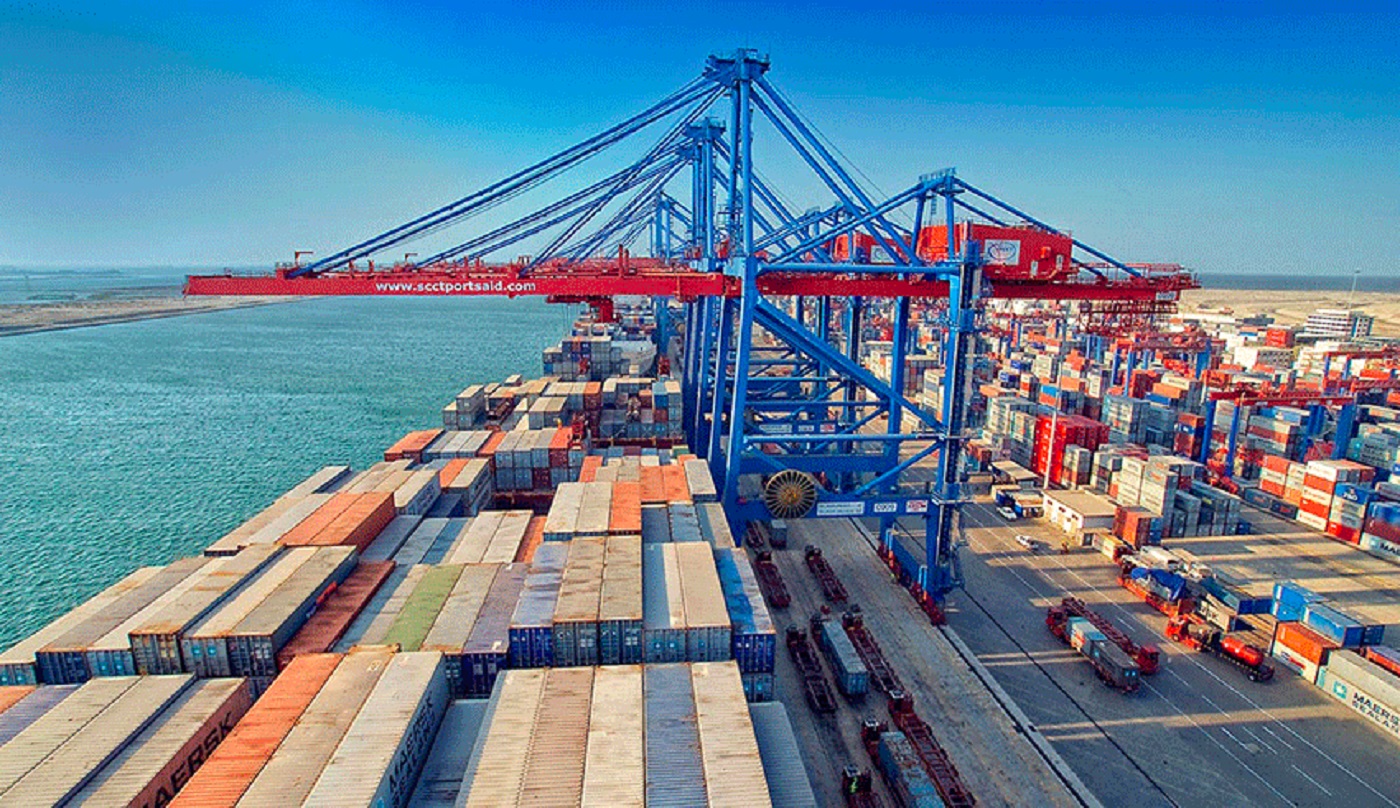
On the African continent, some ports stand out for their efficiency and operational performance. Port-Said in Egypt, the best in Africa, climbs to 3rd place globally with a score of 137. Close behind, Tanger-Med in Morocco, with a score of 136, occupies 9th place worldwide.
In 9th place in Africa, Dakar in Senegal ranks 29th globally. Mogadishu in Somalia and Toamasina in Madagascar complete the African top 5 with global rankings of 29th and 60th, respectively.
China Dominates the Top 5
Overall, the World Bank highlights the supremacy of East and Southeast Asian ports in the 2023 global container port performance index. These ports occupy 13 of the top 20 spots in the ranking.
The best port in the world remains Yangshan in China, with a score of 146.3, followed closely by Fuzhou, also in China, with a score of 139.2.
After Port-Said, we find Dalian in China, with a score of 138.5, which occupies 4th place globally, ahead of Tanger-Med.
This is a clear domination, reflecting the exceptional performance of Chinese port infrastructure, supported by advanced technologies and optimized logistical processes that allow them to maintain a lead over the rest of the world.