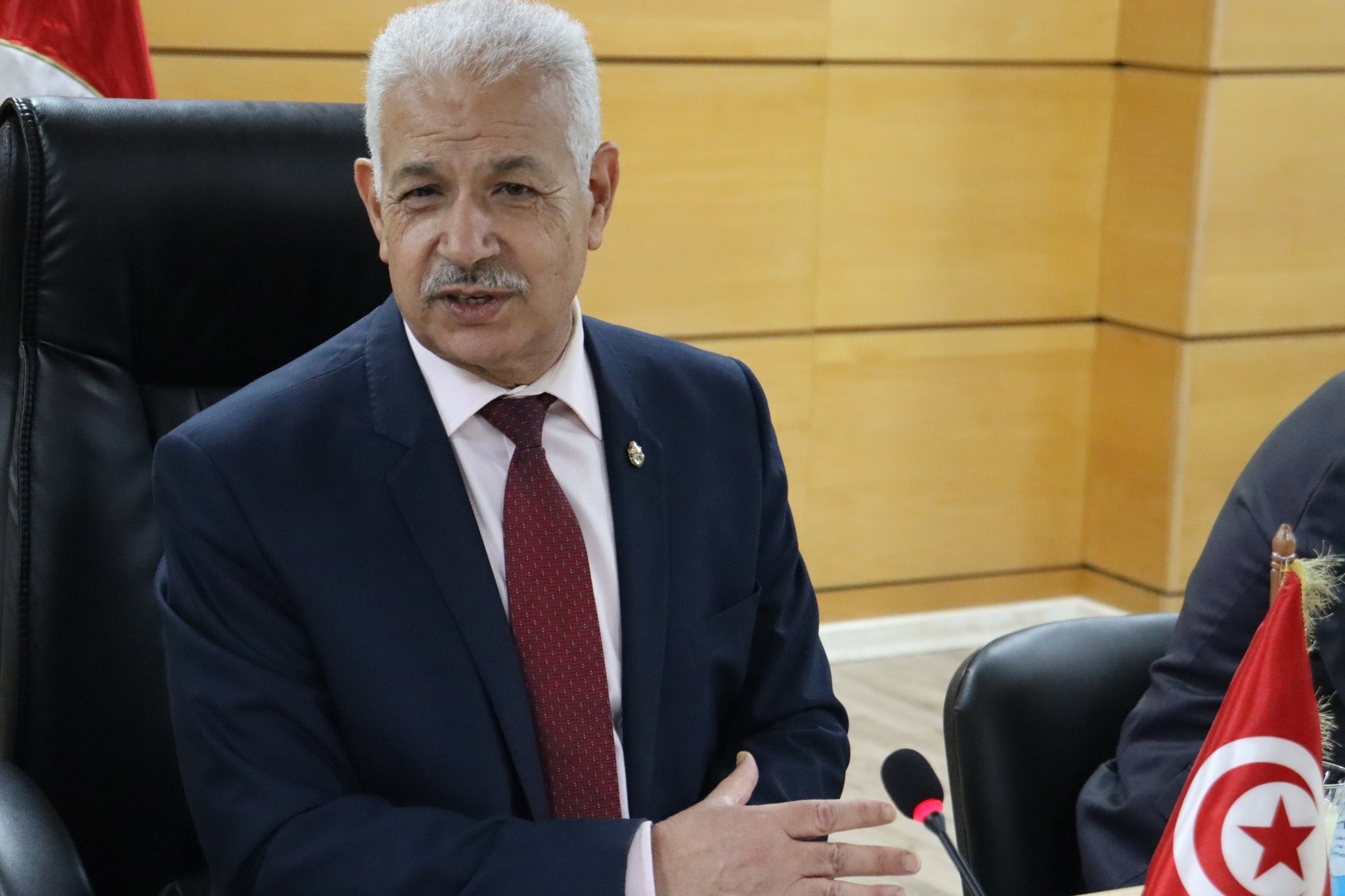
Tunisia is negotiating with both the United States and the European Union to reduce tariffs on its exports, Minister of Trade and Export Development Samir Abid said during the plenary session reviewing his ministry’s 2026 budget, without providing further details.
If successful, Tunisia would join the list of countries that have achieved such reductions, often in exchange for certain commitments.
Abid also highlighted that expanding the use of renewable energy and optimizing its exploitation will help reduce the trade balance deficit, which has already improved with several countries, including Turkey.
The ministry’s programs align with a strategic vision focused on establishing a balanced and fair market, developing commercial and artisanal networks and modernizing and digitizing distribution channels.
This strategy also includes simplifying trade procedures, diversifying and increasing exports, combating illegal import practices and promoting e-commerce.
In cooperation with regional bodies, the ministry is working to establish at least one producer-to-consumer sales point in each governorate, ensuring a supply of essential fruits and vegetables, he added.
This approach aims to curb speculation, boost direct supply, reduce intermediary roles, and offer affordable prices.
Measures against import monopolies
Regarding quotas for coffee, sugar, and bananas, Abid explained that these are exceptional measures to safeguard and control distribution channels.
Dedicated committees regularly monitor these quotas under sanitary conditions and proper storage mechanisms. “30% of the quantities are reserved for household consumption to maintain the state’s regulatory and social role,” he said.
To fight import monopolies, small investors have been authorized to enter the sector, promoting equitable wealth distribution and supporting new private players. Abid lamented that a handful of individuals have been importing bananas for thirty years.
On control mechanisms for agricultural products such as dates, Abid stressed that the goal is not to restrict transport freedom but to map all actors in the value chain, from producer to exporter and identify destination markets.
This organization aims to strengthen the Tunisian brand in packaging, valorization, and exports of products like olive oil, dates, and seafood, enhancing their added value.
This effort has already earned Tunisian exporters several distinctions, particularly in olive oil.
Regarding price control for fruits and vegetables, Abid said it depends on the availability of seasonal and early production, with emphasis on valuing farmers’ work.
Ahead of Ramadan, committees have been working for two months to ensure supplies of essential products such as poultry, milk, and red meat, in coordination with the Office of State Lands, the National Feed Office, and private breeders.
The goal is to facilitate the setup of sales points in major governorates, including live sheep sold by the kilo, with stocks exceeding two months.