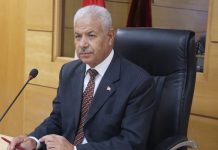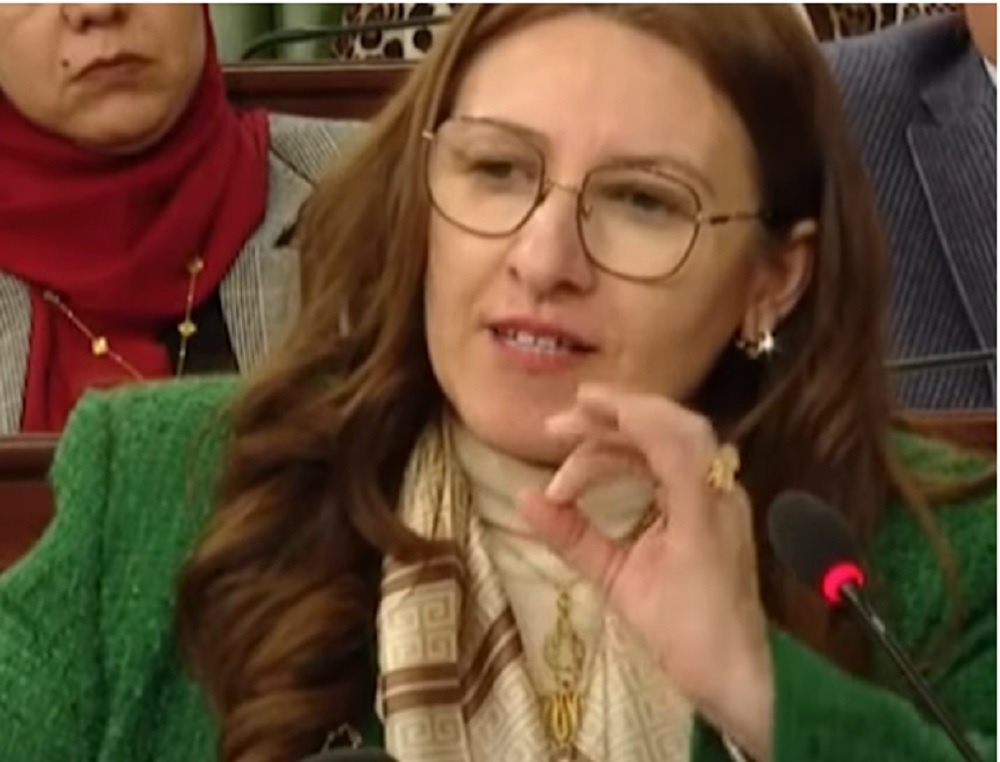
She is no longer smiling, as we were used to seeing this judge in the ARP chamber. The Finance Minister is angry, even though her efforts to hide it are evident.
On Tuesday, December 2, Michket Slama Khaldi wore a serious expression, avoided looking at the source of her anger, kept her eyes on her files, and only occasionally expressed her frustration with her hands, as if signaling the end of recess in an agora that had taken too many liberties, forgetting that she now only holds a legislative function, not the power to legislate as she wishes—independently of the Executive’s wishes and the real needs of the people who elected her.
The Minister’s reasonable outburst
“I would like to recall an important rule that has been overstepped. And I am addressing your sense of responsibility. The state budget has already been voted on, and it requires significant expenditures in 2026 and up to 2028 to regularize situations, address precarious work, and handle the recruitments included in the initial articles, not to mention all the other proposals submitted,” the Finance Minister said firmly, punctuating her words with a decisive gesture.
She added, with a stern expression, like a supervisor catching a student in the act: “I notice that these proposals violate Article 49 of the budget law. And I know what I am saying. The people must listen to me.
Article 49 has been breached, exceeded. That is, deputies are presenting a proposal that generates new spending without additional resources to cover it. And another day, the state will be asked to implement the new law.”
Still clearly upset, the minister intensified her tone: “The state cannot continue this way. What I see is a violation of general financial balances, an attack on the finances of public funds and state-owned companies.
If we continue like this, the finance law cannot be applied. I am responsible before the Tunisian people, a responsibility that honors me, and I will rise to the occasion. I am ready to accept all proposals, but not to contravene the law.”
Has the ARP emerged from the crisis that led to its dissolution?
These remarks, rightly made by the Tunisian Finance Minister, echo a situation the ARP has faced for some time. Parliamentarians have suddenly taken it upon themselves to act like the Executive, proposing some bills and rejecting others, riding the wave of presidential populism.
Two examples suffice: the proposal for a family car, without considering the country’s finances, and the MPs’ proposal to create a special marriage credit line or state aid for Tunisian couples’ weddings.
More generally, the ARP is overstepping its essential role. As one more reasonable deputy notes: “The Assembly of People’s Representatives has unfortunately become an arena of political maneuvers rather than a legislative body.
Each representative presents themselves as the sole expert, proposing initiatives outside the framework of the finance law, as if this law were a tailor-made electoral tool.
Some have self-proclaimed themselves protectors of a depleted people, while others propose disastrous solutions such as creating money, without the slightest awareness of the danger this poses to monetary policy and the stability of the national economy,” said Deputy Halim Boussema in a recent Facebook post.
The same independent deputy added: “Under this populist rhetoric, which pushes the country toward unenforceable legislation and hinders the state instead of unleashing its potential, Parliament has unfortunately become one of the main causes of the current economic crisis.”